Sometimes, Steve Earle worries people think he’s stopped writing songs.
At 71, Earle’s one of the most prolific writers alive today — best known for songs like his first hit, “Guitar Town,” his generational bootlegging outlaw ballad, “Copperhead Road,” and the traditional Irish music influenced “Galway Girl.” But Earle’s been busy writing a musical for the last few years (an adaptation of the 1983 Robert Duvall film, Tender Mercies), and the character-driven country/rock songs that made him famous took a back-burner as the musical consumed his creativity.
This spring though, Earle wrote a new song. Not for ego’s sake, but rather because he couldn’t not; Earle’s spent much of his career in the music business singing for and about downtrodden and misunderstood characters, and his activism includes campaigning against the war in Iraq and corporal punishment. Watching Tom Morello (of Rage Against the Machine and Audioslave) and Bruce Springsteen protest I.C.E. activities in Minneapolis, Earle thought, “‘Fuck this. I’m supposed to be the political one, right’?” he says. “I felt like I needed to do something.” So he figured out what to add to the conversation about the current cultural, social, and political unraveling of the United States, singing:
In the swing of a hammer, a lifetime flew by
I raised a family, but now I’m alone
A voy a volver a Celaya
I’m goin’ back home
Though he’s been making commercial music for more than 50 years across 21 studio albums, the new song is easily some of Earle’s best work. "Volver A Celaya" released digitally today, and is out as a 7" on October 16 via New West Records. In the space of two long verses and three scant minutes, through the voice of an unnamed narrator, Earle swiftly evinces the allure of the American Dream and how easily it crumbles under the forces that so often strip immigrant and working-class people of everything that dream promises. Fittingly, Earle invited Los Lobos to Richmond, VA’s Red Amp Studios to record the track. They bring decades of experience — fusing cultures with their heavy-hitting Chicano rock – and their warm accordion and rich bajo sexto to fill out the cross-border tale.
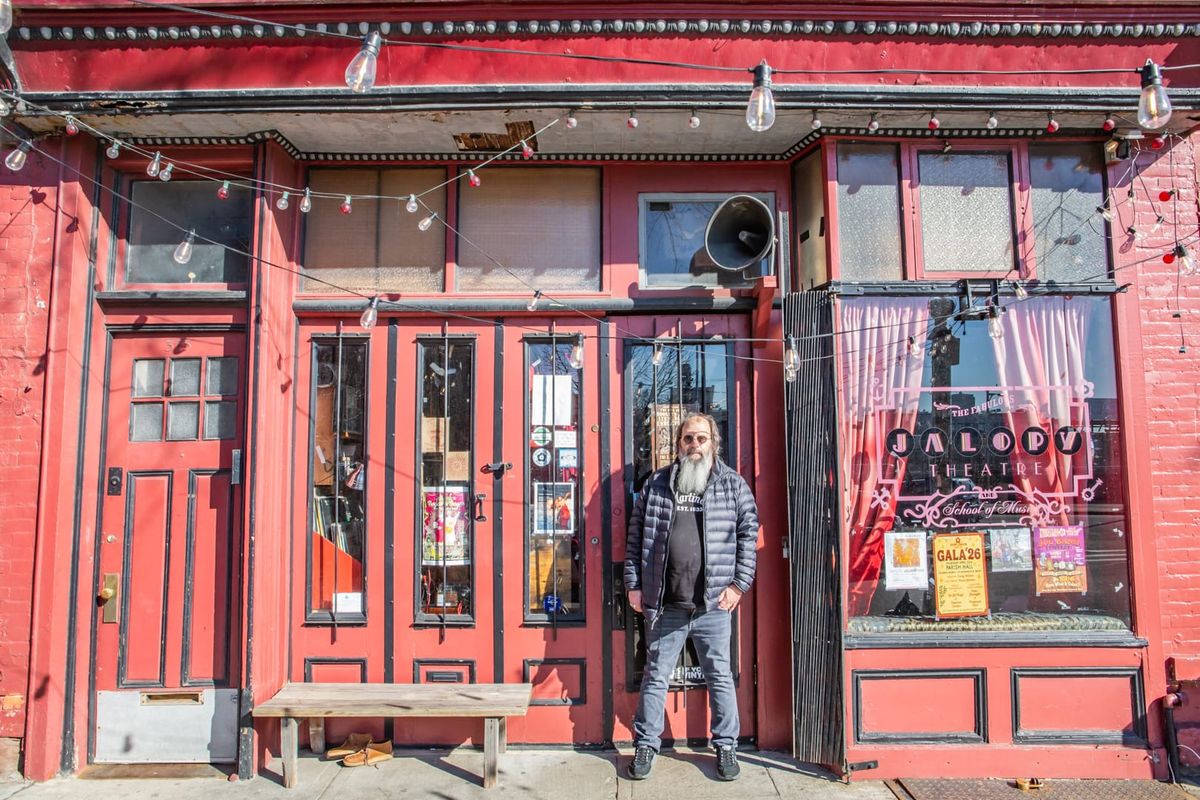
“My gift has always been lyrics; that’s what I was put here to do,” Earle told a songwriting class this spring at the Jalopy Theatre and School of Music in Brooklyn. Whereas so many songwriters might guard their new work tightly, Earle wrote the song concurrently to teaching the class, jotting notes into his phone while walking to and from school drop off for his youngest son, John Henry. As soon as he had a draft, he shared it with the students, playing for them his melancholy, intricately finger-picked demo, and telling them: “I can’t write any better than this, guys…I’m really super proud of it.”
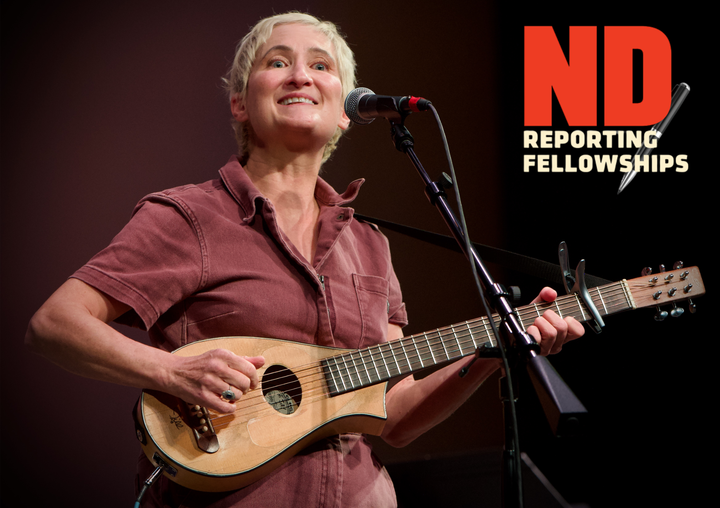
The class, in turn, helped Earle settle on a tidy two verses instead of three. As he wrote and perfected the lyrics, he talked to them about the changes he made along the way, telling them how he debated if the protagonist “bought” or “caught” a ride across the Mexican border (he settled on “caught”); his meticulous use of soft consonants so the song, sung largely in English, would have the rhythm and cadence of Spanish; his decision to pronounce “Mexico” in Spanish, and sing one line of the chorus in Spanish; and all the subtle ways he made the song rhyme.
“[Poetry] does something in your brain that makes it kinda fun, it makes you assimilate it,” he says. “[Rhymes] — they’re tricks, like buttons you can push in your brain.” That the song coincided with class is coincidence, but dissecting it in real time as he wrote, Earle brought the class along for the creative ride; or as Earle puts it, “I know where the bodies are buried” — he could deconstruct his process and show them how he settled each word and concept into place.
Building a Better World
Earle’s a loquacious educator. He never finished high school, but he’s an autodidact, a history buff, and a fan of literature. In his gruff drawl, he is as likely to deliver an off-the-cuff lecture on the Roman Empire as he is on the works of William Shakespeare (Earle’s an Oxfordist, ascribing the legendary works to the 17th Earl of Oxford, Edward de Vere); or he might discourse on the supreme songwriting chops of John Lennon and Bob Dylan (each wanted to be the other, and the competition drove music in their heyday to an Olympic caliber, he’ll argue).
Likewise, Earle is a musical polyglot. He holds up everyone from Dylan and Springsteen (who is said to have had a hand in Earle’s early success when he was spotted purchasing Earle’s Guitar Town) to Taylor Swift (whom he calls, “a fucking genius”) to Metallica (so lyrically talented in his esteem, that he claims they’re the only management-mates he’s ever been jealous of), and he possesses a remarkably diverse musical catalogue himself.
He’s written rock and country songs about itinerate dreamers (“Someday,” “Hillbilly Highway,” “Nowhere Road”); the folkier “Fort Worth Blues,” about Townes Van Zandt and “Little Rock ‘N’ Roller,” about a dad missing his son’s childhood while on the road; the outlaw “Devil’s Right Hand” (covered by The Highwaymen); cowboy song “Me and the Eagle;” and “Goodbye,” a surprisingly sweet song to a lost love, which was the first song Earle penned after getting sober through jail and rehab in the early 1990s. (Earle’s wide-ranging addiction and drug abuse is well-chronicled in the 2002 biography by Lauren St. John, Hardcore Troubadour: The Life and Near Death of Steve Earle.)
Earle’s also written complex, character-driven songs like “Billy Austin” and “Ellis Unit One,” advocating against the death penalty; plenty of bravado and girl-chasing songs; and 2007's “City of Immigrants,” a love letter to New York for which Earle just released a Steve Buscemi-directed music video, which will serve as the B-side to October's 7" single release with "Volver A Celaya." Earle’s also written novels, essays, poetry, and now, the Tender Mercies musical, and even claims he moved to New York City in the early 2000s to breathe the same air as playwright Tony Kushner, author of Angels in America. It’s an impressive range, rendering Earle especially conversant with the musical styles sought by his students.

In his Jalopy class, Earle clearly feels an enormous allegiance to these students, particularly the teenagers. His classroom disquisitions are peppered with advice, too. He offers intellectual suggestions — “You cannot write if you don’t read. You can’t write. There’s not enough stuff. This level of songwriting we’re talking about in here, where you’re trying to make art on purpose — whether it’s pop music, whether it’s metal, whatever it is. You can’t get everything you need from other pop songs. Especially at this moment in musical history.” And, more relevantly to Earle’s own life lived, he delivers creative guidance, as well: “The idea that you have to hurt yourself to do this is bullshit. If you do hurt, the hurt should be in the work.”
Situated among the picturesque brick row houses of the Red Hook neighborhood in Brooklyn, the Jalopy Theatre and School of Music has been well-loved into slightly shabby charm over decades as a haven for folk music in New York City. Unfailingly community-oriented and driven, the theater hosts shows from both local and touring musicians, and the school offers a wide array of music and dance classes for children and adults. At the heart of everything the Jalopy does, is the conviction that the connection between music and world history is of singular importance to culture, community, and future generations of artists and thinkers.
“It's passing down culture to the next generation. That's the whole point of everything, really, of the survival of humans. We're a cultural species. Culture is everything. And human beings, we evolve culturally. That's our great gift,” says Eli Smith, Founding Producer of the long-running Brooklyn Folk Festival and Director of Jalopy Records.
“The motto of the Jalopy Theatre and of Jalopy Records is ‘tradition and creation.’ So we believe — and to me, it's obvious — that tradition is the basis for creation. Everything has a history and strands that run together to make it, and being knowledgeable about where your influences are coming from [is important],” Smith says, noting that it is a tough and critical time to make and encourage folk music. “The dark, evil forces that are at work that represent greed and are trying to destroy society…they're against doing things in a communal or mutually beneficial way. It's a fascist ideology and it's every person for themselves. And so that's the opposite of what we're talking about.”

Smith paraphrases a comment from one of his mentors — ethnomusicologist and folklorist Henrietta Yurchenco — who noted (as many others have) that folk music often bubbles up in times of strife. (The lore of the 1960s Greenwich Village is one of the most famous examples the American Folk Music Revival.) And in similar ways, musical revolutions like outlaw country, grunge, punk, and even some of Earle’s early, genre-averse music, each represent a counter cultural response to moments of moral upheaval and reconfiguring in social and political consciousness.
“I think it made people believe that Dr. [Martin Luther] King was right. I think it made people believe you can sing things that you can't say. And I think it became so much a part of our consciousness that we believed,” Earle says of the 1960s folk revival and its indelible role as the mouthpiece for a generation’s discontent. “We asked ourselves questions — the questions that are in ‘Blowing in the Wind’ and we thought we could make a better world. And so we started doing it."
Empathy is the Job
At the Jalopy, Earle taught two songwriting classes this spring, one for teenagers, and one for adults. Although he’s led class at his own Camp Copperhead, at the Old Time School of Folk Music in Chicago, on the annual Cayamo: A Journey Through Song cruise, and more, these sessions at Jalopy have been his first time with a class comprised entirely of young people. Their presence is inspiring for Earle, because, he says simply, “They might grow up to be songwriters.”
Earle speaks with a ready irreverence reflective of his rough and tumble reputation and his past of hard-living. It would be easy to mistake this default tone for callousness. But let him ramble for a minute, and his heart reveals itself.
In class, as part of the forensic recreation of his songwriting process, Earle played his song “John Walker’s Blues,” released on his 2002 album, Jerusalem, his first entirely political album, written after the terrorist attacks on the United States on September 11, 2001. He reflects, “It was just trying to understand why this place so far away from where I live had been affecting my life for nearly all my life, and eventually leading us to this war.”
Earle penned “John Walker’s Blues” from his perspective as a father more than anything else, based loosely on the story of John Walker Lindh, an American teenager who was radicalized and converted to Islam. After Lindh travelled to Afghanistan, the town where he stayed was attacked by the American military, and Lindh was injured and captured. “I saw a 20-year-old kid emaciated, duct-taped to a board on television on CNN. I'll never forget it. My first reaction was, ‘Oh, he's got parents and they've got to be sick,’” Earle says. Lindh was at the time the same age as Earle’s son, Justin Townes Earle (an accomplished songwriter in his own right, who died after an accidental drug overdose in 2020).
Humanizing and complicating a character based on Lindh’s actions in the hair-trigger atmosphere that followed the terrorist attacks was no easy task, and caught Earle plenty of heat. But what he showed the class was the way sampling a line in Arabic for “John Walker’s Blues” captured a sense of place in the story, much the same way he did by singing Spanish in “Volver A Celaya."
“The main point of that is to tell a story ‘based on,’ create a character that tells a story,” Earle says. “It's a way more effective way to get a political idea, especially an unpopular one across; you can sing things that you can't say.”
Earle teaches with a rare openness. He cultivates an environment where his students seem comfortable arguing with him — about his work and theirs. In the teen class, he softened listening to their songs, yet addressed them with respect, taking each song as a serious work. “I love the ‘invisible tiara,’” he told one student who’d brought in a diss track pop song. “Who is speaking to us?” he asks another student who’s working on an abstract, folky song. And he suggests a third consider throwing in a familiar image like, “up above the world so high,” to make a song about feeling isolated resonate better.
According to Earle, a songwriter’s fundamental role is empathy. “The difference between good songs and great songs is second and third verses that are as good as the first,” Earle, who has an affinity for second verses, told the class, as he methodically pushed them on word choice, texture, and flow.
“I am just starting to think about writing songs. I make my own licks and improvise a lot in my music, but writing songs is a whole different thing,” says Riyae Park, an 11-year-old flat- and finger-picking guitar player who took the class. “In general, Steve talks to us as real human beings and not little kids. I can tell he respects everyone's experience. He is real and he cusses a lot and I appreciate it.”
“That's the difference between the adult class and the kids' class. In the adult class, there's a lot of people there that are very familiar with Steve and his music. And that's good,” Smith points out. “In the kids' class, they know who he is, but they didn't grow up with his music, not really, unless it was through their parents. So they're experiencing someone as a knowledgeable teacher without the burden of celebrity.”

Cultural Reflection
There’s a certain kind of imagery in some of the best folk songs, which is enlivened by both motion and breadth, propelling action across great distances within a few words. John Prine’s “Sam Stone” ("There’s a hole in daddy’s arm / Where all the money goes") for instance, and Guy Clark’s “Let Him Roll” ("Then he lost the thread and his mind got cluttered / And the words just rolled off down the gutter"). Earle has tapped this lightning rod a couple of times himself, like in “Guitar Town” (“I got a two pack habit and a motel tan / When my boots hit the boards, I'm a brand new man”) and “Copperhead Road” (“I volunteered for the Army on my birthday / They draft the white trash first 'round here, anyway”). He strikes it once again in “Volver A Celaya,” which covers immense emotional and spatial distances:
Two of our boys went to fight in Afghanistan
One of ‘em didn’t come home
They were raised to believe in this country
That I barely recognize now
The Migra come masked in the night without warning
The children scream when they knock the doors down
Strikingly spare, the lyrics’ weight comes in part from the power of the words Earle allowed to make it to the final draft. “Learning to let go of stuff, knowing when to quit, is one of the hardest parts of songwriting,” Earle says. What remains is a heart-wrenching, graceful song about hope and dissolved dreams, set against the backdrop of the crucible of the American immigration system.
“Volver A Celaya” is distinctly a protest song. In its piercingly humane, first-person narration, it possesses a staying power which will fade from topical protest songs. The song plays out not just today as immigrants are targeted, detained, and deported, or simply wash out because of the fear pervading their promised land. So too, “Volver,” partially inspired by the guys Earle used to frame houses with, touches on the generational story of working class Americans and immigrants whose bodies, minds, and families end up sacrificed to a powerful economic system, which values their dollar contributions above their lives.
In times of calamitous devolution toward division, hate, and greed, folk music holds up the cultural mirror to the proverbial face. And though it’s harder than ever to keep going — the Jalopy Theatre, like so many arts organizations, lost its federal funding — Smith says it’s essential to do so.
“Trying to get money out of folk music is like trying to get blood out of a rock. So what we do, it's not designed to make money,” he says. “And so we don't have any money. We're broke. We don't have enough staff. We work too much. But we do it because we care about it. So we're here. And that's how that is. And we do the best we can with that. And we're still here. So we won.”
Reflecting on the moment and the role of a musician, Earle too is thinking of the cyclical nature of social politics, wondering if it’s bound to repeat itself or if something new will come. “We did change the world, but then we made money and started trying to figure out how to keep it all. And it's just the way that it is. It's human nature. But it's also something to think about and maybe to try not to let it happen, if we get another shot at it, which I hope we do,” he says. “I'm an optimist. But this is the test. We're getting ready to find out whether we actually have a functioning democracy or not. And we find out in just a few months. And I think it's all on the line this November. People have said that over and over again. They finally said it so many fucking times it’s true.”
When all hope feels lost, sometimes the only thing left to do is hold out for a better tomorrow. The hope in “Volver A Celaya” survives in what’s left unsaid: Maybe this will be the last time. Maybe soon, society will value life and input equally, regardless of status. Like Earle’s protagonist, who left his home to come to the U.S. in search of something bigger and better — and like the many immigrants, fighters, wanderers, and dreamers Earle sings for in his songs — he’s still holding on, too.
“Absolutely,” he says. “That’s what hope is for.”

Steve Earle's new song, “Volver A Celaya,” is out now and the physical release with “City of Immigrants” is due out October 16 via New West Records. For more information about upcoming classes at the Jalopy Theatre, visit their website.
Comments ()