Editor's Note: October 12, 2026 marks the 20th anniversary of the Gullah Geechee Cultural Heritage Corridor being federally designated as a National Heritage Area National Heritage Area. This month also marks Gullah Geechee Heritage Month, so No Depression is sharing this feature from the Summer 2018 "(Im)Migration" issue about the roots band Ranky Tanky carrying on these traditions. The South Carolina-based group also released its latest record, This Village, in July.
Beyond the constant whoosh of waves, deep within the scruffy tangle of maritime forest, above the high-pitched osprey cry, cackles of gulls, and hum of too many damn mosquitoes, the distant echoes of Capers Island’s former Gullah inhabitants still reverberate. On the tiny undeveloped sea island north of Charleston, South Carolina, ghostly refrains of songs like “Watch that Star” pierce the night’s obsidian sky.
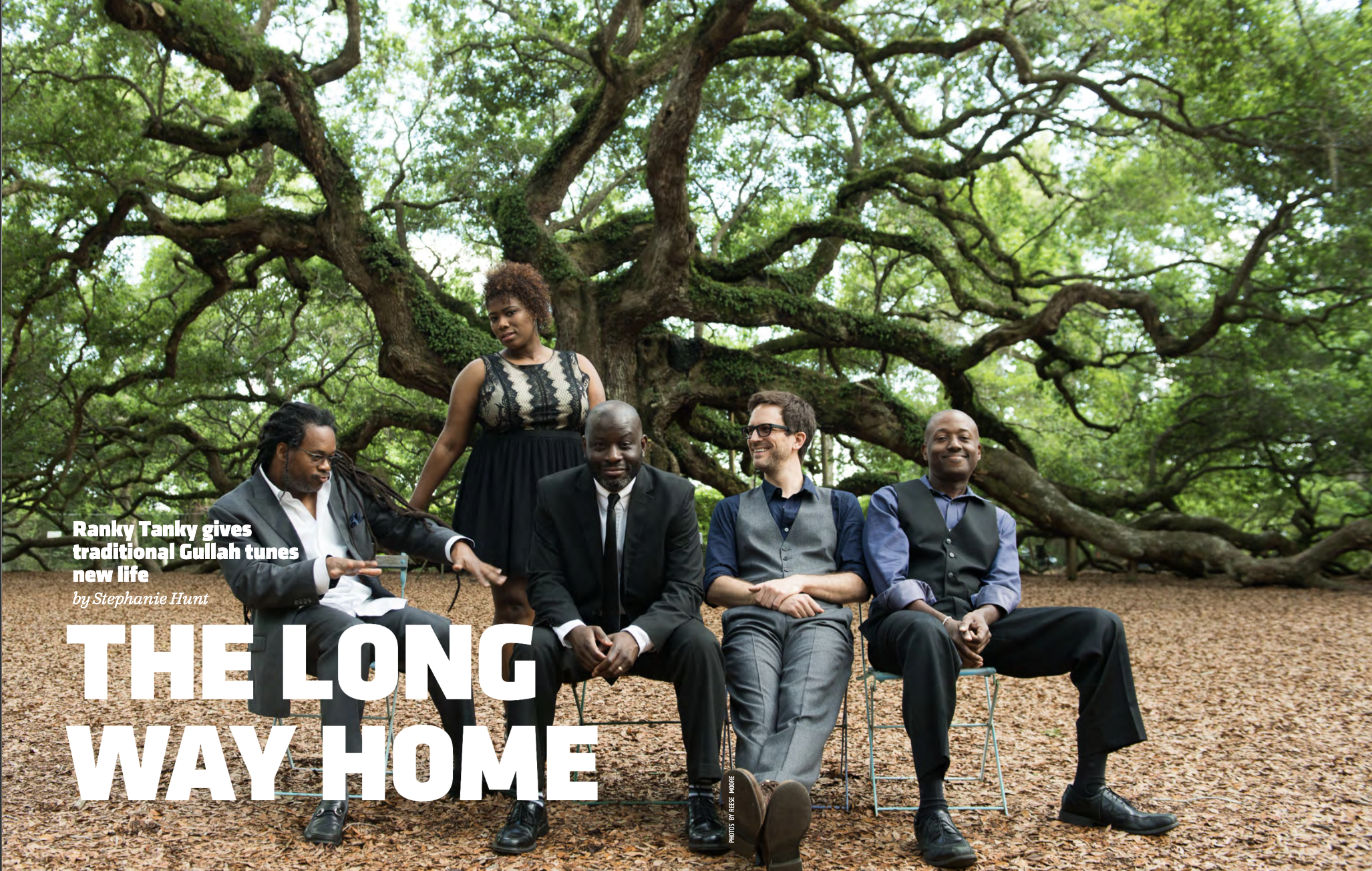
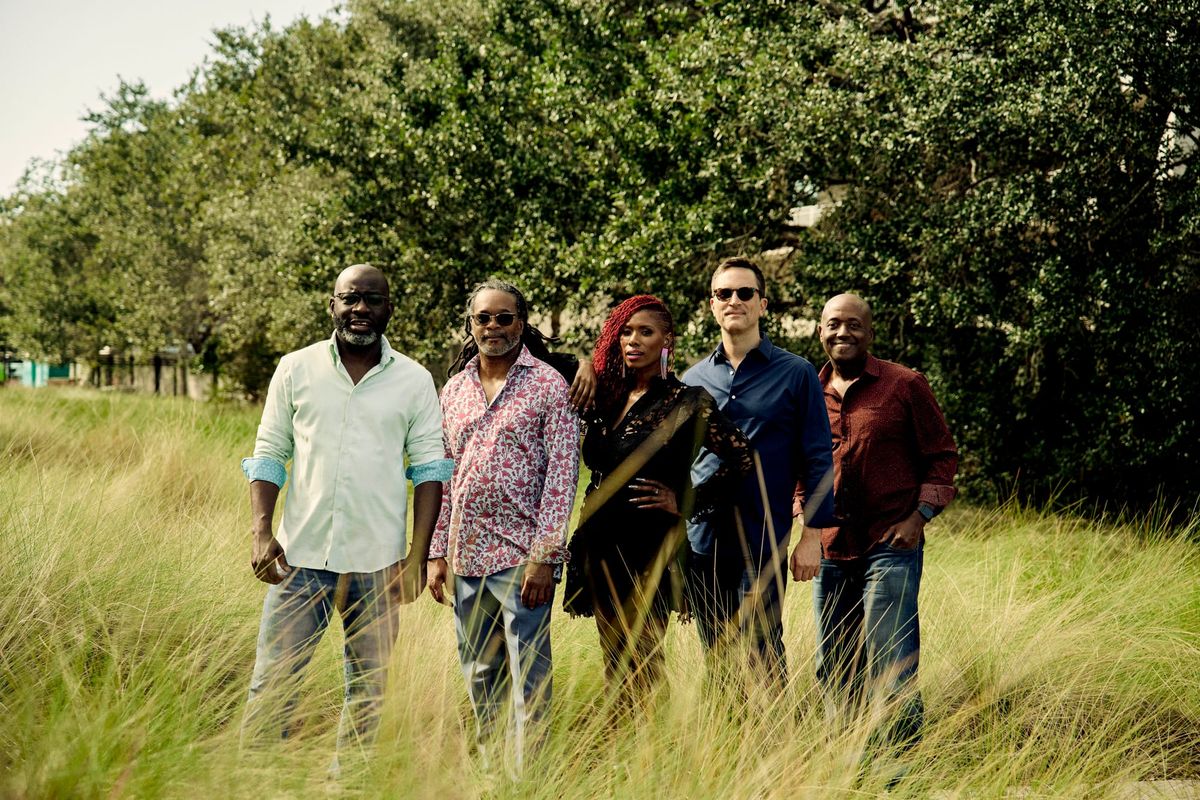
“That was Big Daddy’s song,” says trumpeter Charlton Singleton, speaking of his grandfather, who was born on Capers in 1892 and lived among other formerly enslaved Africans until an approaching hurricane sent them in search of higher ground. Today, Singleton and his longtime friends and bandmates — singer Quiana Parler, drummer Quentin Baxter, bassist Kevin Hamilton, and guitarist Clay Ross — are watching their own star rise as their band Ranky Tanky delivers inspired, jazz-infused renditions of classics like Big Daddy’s favorite, among other traditional Gullah songs.
“These are tunes we grew up with,” says Singleton, whose family still lives in the rural Ten Mile community (10 miles from the Cooper River that divides Charleston from Mount Pleasant and points east) where Big Daddy’s family sought refuge from the storm. In fact these songs — a mix of nursery rhymes, children’s games, and spirituals — were so familiar to him and Baxter (also a Charleston native of Gullah descent) that when Ross, the band’s only white member, asked if they knew some of the tunes he’d discovered while listening to old field recordings, they just looked at each other and laughed.
“Of course,” they told him. “We’ve been singing them all our lives.” Only not like Ranky Tanky does.
The name Ranky Tanky can be loosely translated as “get funky” in Gullah (which is the name of both the dialect and the sea island people of West African descent who speak it). And that’s exactly what the band does on its eponymous first release — they add an inspired, jazzy, and playfully funky twist to the tunes and rhythms woven deep into the fabric of communities along the South Carolina and Georgia coast.