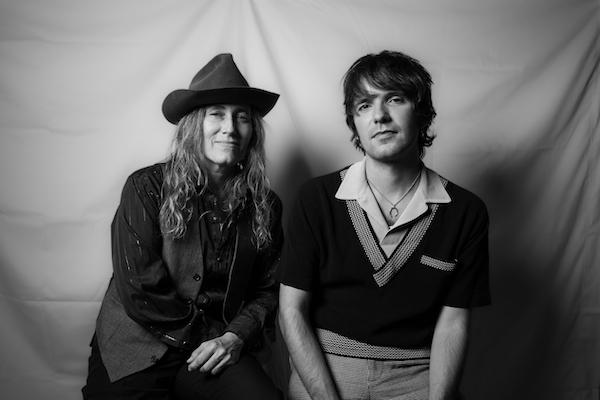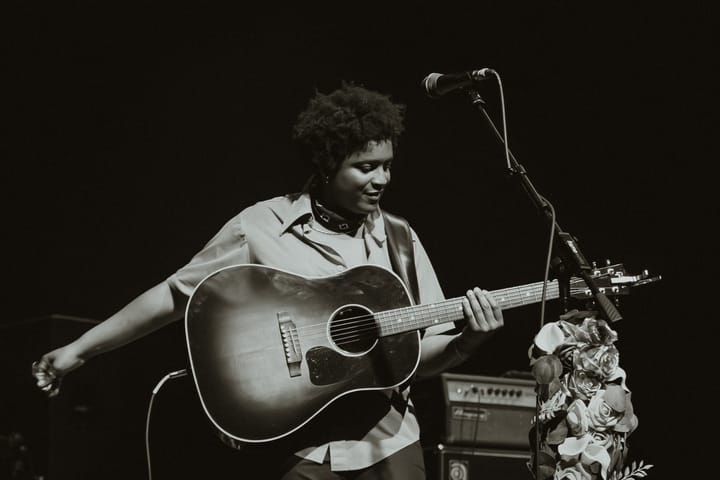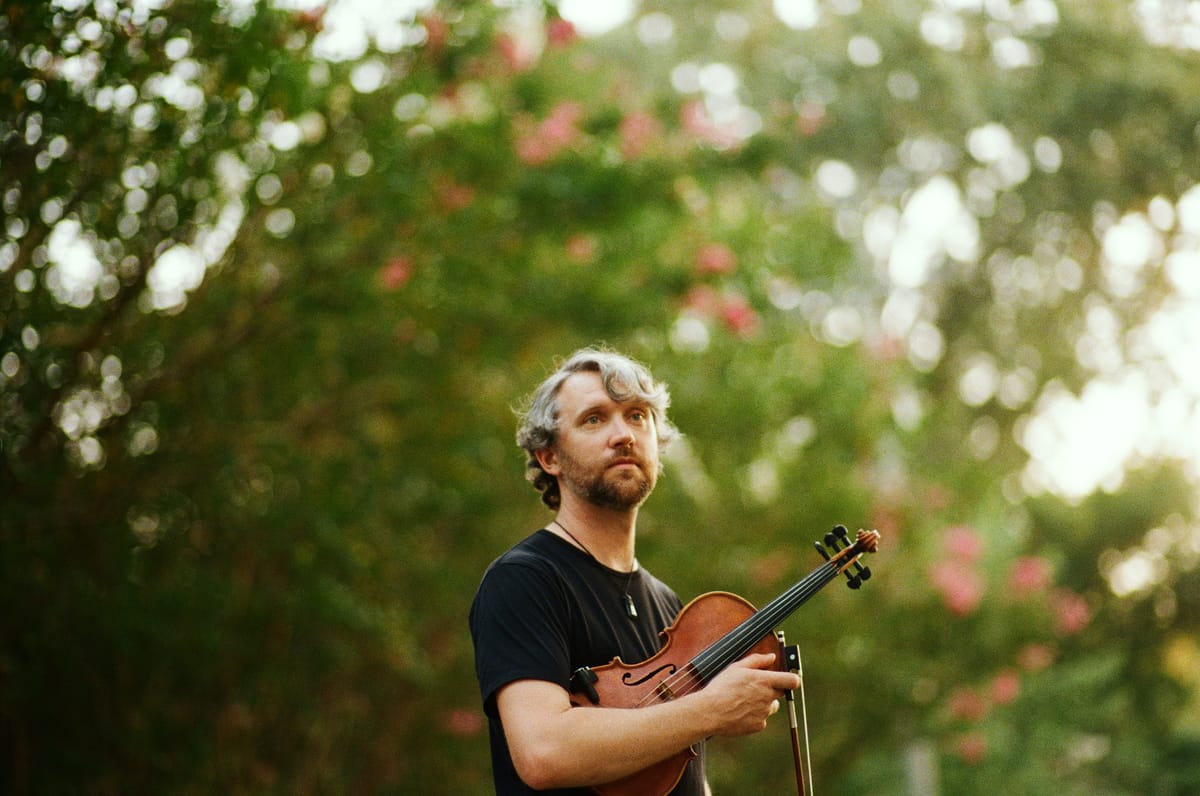
EDITOR’S NOTE: No Depression’s is thrilled to share this timely essay from Nashville-based fiddler George Jackson. His new album with a trio, titled Center of The Universe, was recorded live and without creative direction from artificial intelligence.
This is a fraught moment for artists and musicians. A musician’s artistic output is devalued to the order of fractions of cents per stream, attention spans are waning (often lasting only as long as a TikTok video), and to AI is getting better, stronger and easier to use with every passing day. How do we as artists and musicians push back against the machines?
I think part of the answer lies in leaning into our humanity and our imperfection. One of the most upsetting things about this moment is that the AI promise has always been that we’ll be able to do away with menial jobs through this technology, so that we might all have time to spend on things like music and art. Instead, the creation of visual art, music, writing, and even video are right at the frontier of popular culture’s uptake of AI. This further devalues the role of artists, in fact, working against that original promise; used in this way, AI sends us the opposite direction by potentially forcing working visual artists, writers, and musicians into menial labor simply to pay the bills. An apocalyptic irony that seems all too imminent.
While conceiving of and making my new album Center Of The Universe in late 2024 and thinking about this predicament we find ourselves in, I felt the urge to lean into making music that keeps our human elements essential. Mistakes, improvisation, chance, interaction, and experiment.
For me, it’s always about finding a balance in the recording studio with my fiddle in hand. Digital manipulation can achieve perfection, but I try to resist those temptations, keep myself open to my human errors, and leaving “mistakes” in there. I remind myself, “All said and done, that’s what I actually played.”
If I edit it too much, the music sounds a bit surreal — bow directions changing mid-note, impossible transitions, or musical ideas interrupted with thoughts and feelings from a different time of day. All this can be “fixed,” though. Different takes can be chopped up and spliced until a song is just a “perfect” combination of moments recorded across a span of days. Notes can be auto tuned to align with your conditioning to equal temperament perfection. Timing can be snapped onto the grid, so that your music resembles graphs with perfect wave form placements.
All of this has been available to musicians now for decades and made widely accessible thanks to digital recording software which one can have in any given room on a laptop. Let’s face it, everyone does it, I’ve done it, some of my biggest musical heroes are infamous in our bluegrass community for how much they edit their albums. But if we give in to those temptations, by turning ourselves into our robot versions, if we promote and model the kind of perfectionism that one can achieve through digital editing, we’re getting rid of the only part that AI can’t copy — human error.
A few years ago, I had a friend send a couple of “bluegrass” tracks he’d prompted out of an AI generator to a group chat of musicians. We all laughed at how weird it sounded, but I was also struck by how it got certain elements of the music kind of right. It was pretty horrifying to be honest, like being in a distorting mirror room at a circus. I couldn’t tell what was worse, the distorted version of bluegrass it spat out, or the fact that it was so close to reflecting our music back to us and only getting better by the week.