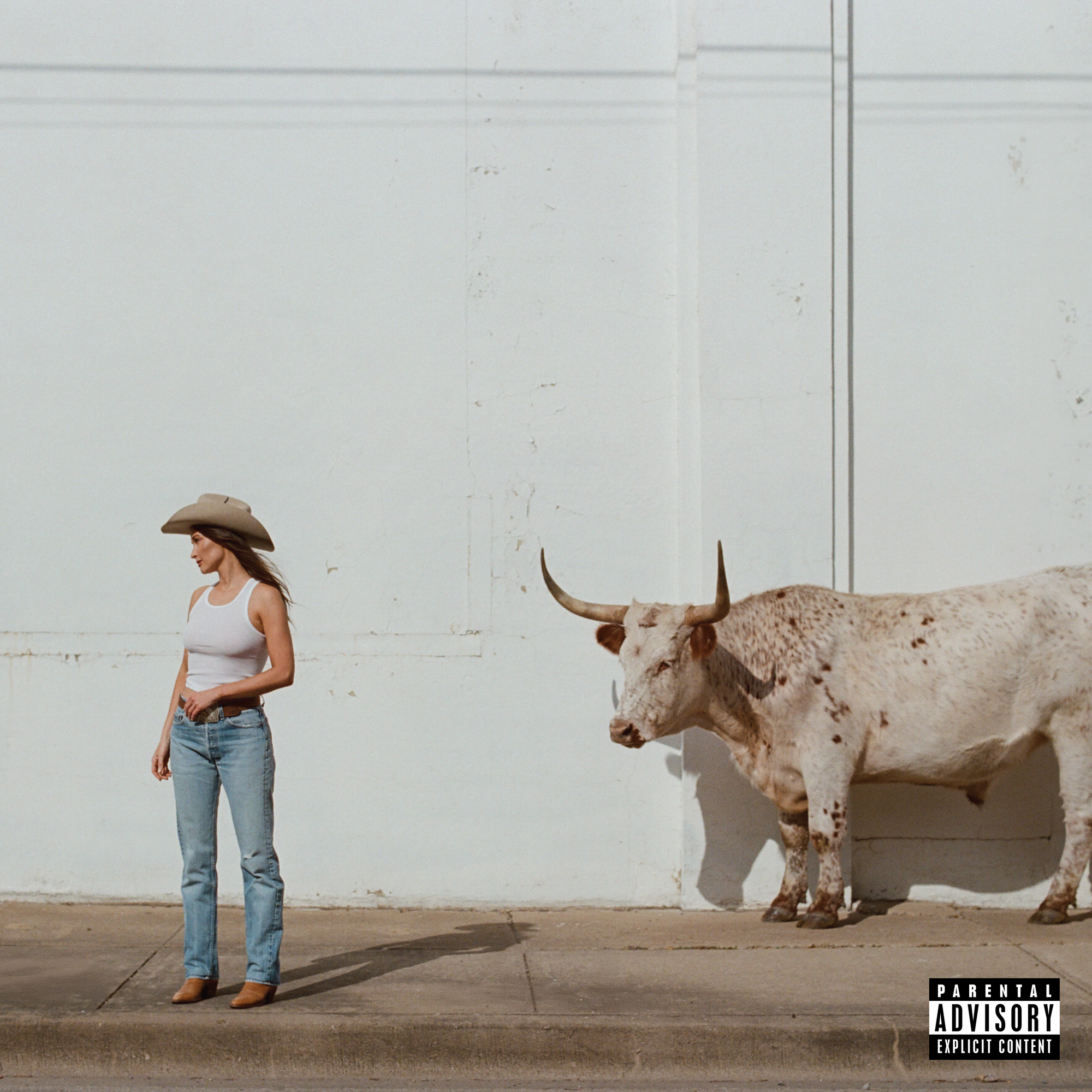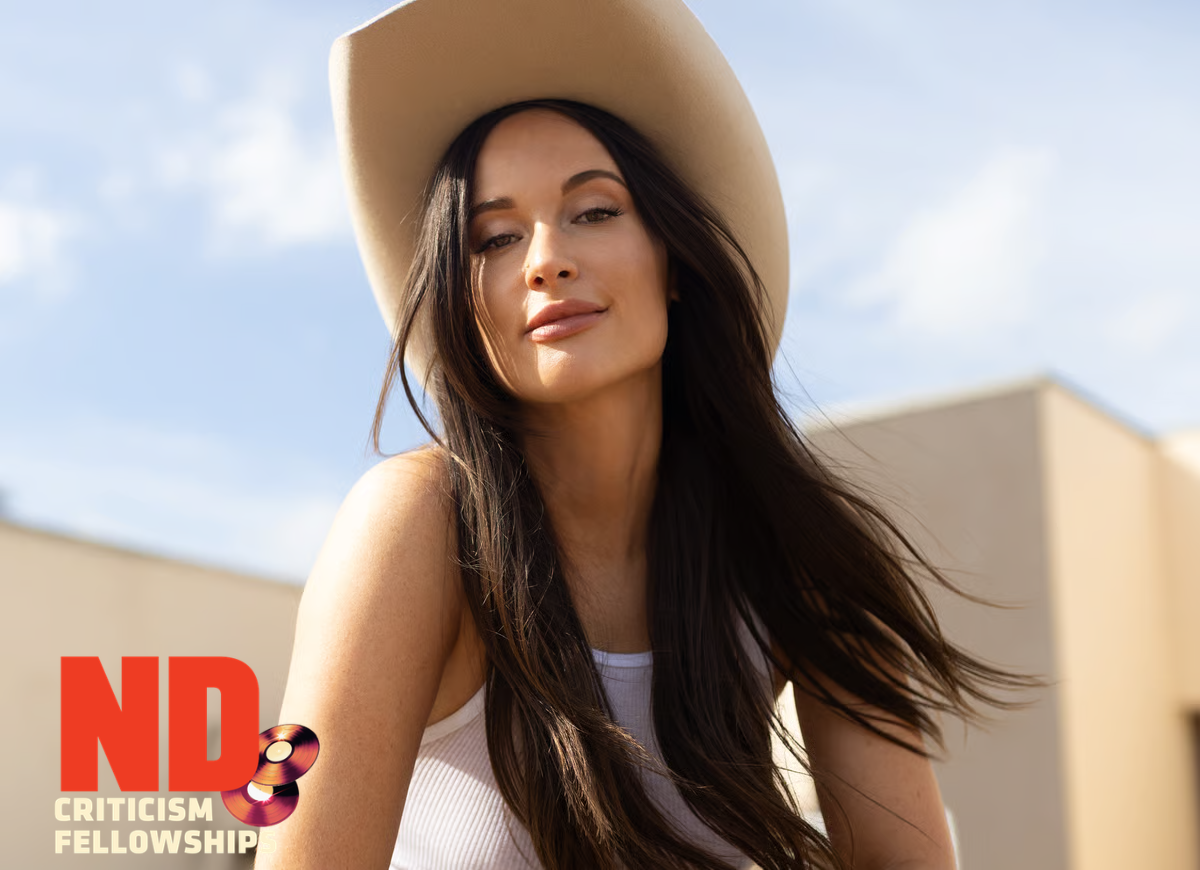
Editor's Note: Annie Zaleski has been awarded one of two No Depression Criticism Fellowships to write in-depth album reviews on roots music's most important albums. The Criticism Fellowships kick off with this review of Kacey Musgraves' Middle of Nowhere, out today via Lost Highway.
Nobody sets a vivid scene quite like Kacey Musgraves. Within the first 20 seconds of Middle of Nowhere, she sings of a desolate place “out there on the edge of world, way past common sense” that's also beyond the Dairy Queen and the county line. Still, Musgraves makes it clear that she’s happy in this fence-less open land. “Gonna find my own peace,” she admits. “I wanna be somewhere in the middle of nowhere.”
Fittingly, Musgraves first spotted the phrase "somewhere in the middle of nowhere" on a sign while visiting her hometown, Golden, Texas — a tiny rural city located 90 minutes east of Dallas where her musical talent blossomed. Growing up, she was a fan of outlaw country artists like Willie Nelson and Waylon Jennings, but also iconoclastic women such as Linda Ronstadt, Shania Twain, and Alison Krauss. By the time Musgraves was a teenager, she had learned mandolin and guitar and started performing live, playing in Texas Opry houses and in a duo called the Texas Two Bits. She also became a champion yodeler.
Crucially, Musgraves also started writing original songs while still in elementary school and worked tirelessly to hone her craft. When she moved to Nashville as a young adult, she was well-prepared to step out as a hit-making songwriter and solo artist. On her 2013 debut, Same Trailer Different Park, she pushed for country stardom while also leaning into rootsy Americana, collaborating with songwriters such as Brandy Clark, Shane McAnally, and Josh Osborne. Yet Musgraves wasn't beholden to tradition: "Follow Your Arrow" attracted controversy and was banned by country radio over references to smoking marijuana and same-sex love. Same Trailer Different Park was critically acclaimed, even winning a Grammy for Best Country Album, but Musgraves earned a reputation as a rebel, someone who had no interest in conforming, much less conforming to expectations.
That became evident as her career progressed, whether lyrically (Pageant Material's "Good Ol' Boys Club," a withering takedown of slimy industry sexism) or musically. On her third album, 2018's Golden Hour, Musgraves found kindred spirits in the production and songwriting team of Ian Fitchuk and Daniel Tashian. Together, they applied a luminous production sheen to music that braided together pop, folk and country influences. For example, galloping disco grooves with guitar twang on "High Horse" or starry-eyed pedal steel floating through the airy, psychedelic "Oh, What A World." The evolution was a resounding success: Golden Hour won Grammys for both Album of the Year and Best Country Album.
Musgraves continued working with Fitchuk and Tashian, vacillating between pop-leaning material (2021's star-crossed, released in the wake of her divorce from Ruston Kelly) and introspective, folk-driven fare (2024's Deeper Well). But even as crossover stardom beckoned, she didn't forget her roots. For example, star-crossed featured a cover of "Gracias a la vida" by the Chilean folk singer Violeta Parra and she hired a teenage mariachi band to open her album release shows in Texas. Having found the confines of mainstream country stifling, she redrew the boundaries to fit her vision, keeping what mattered (songs and stories) and jettisoning the rest.