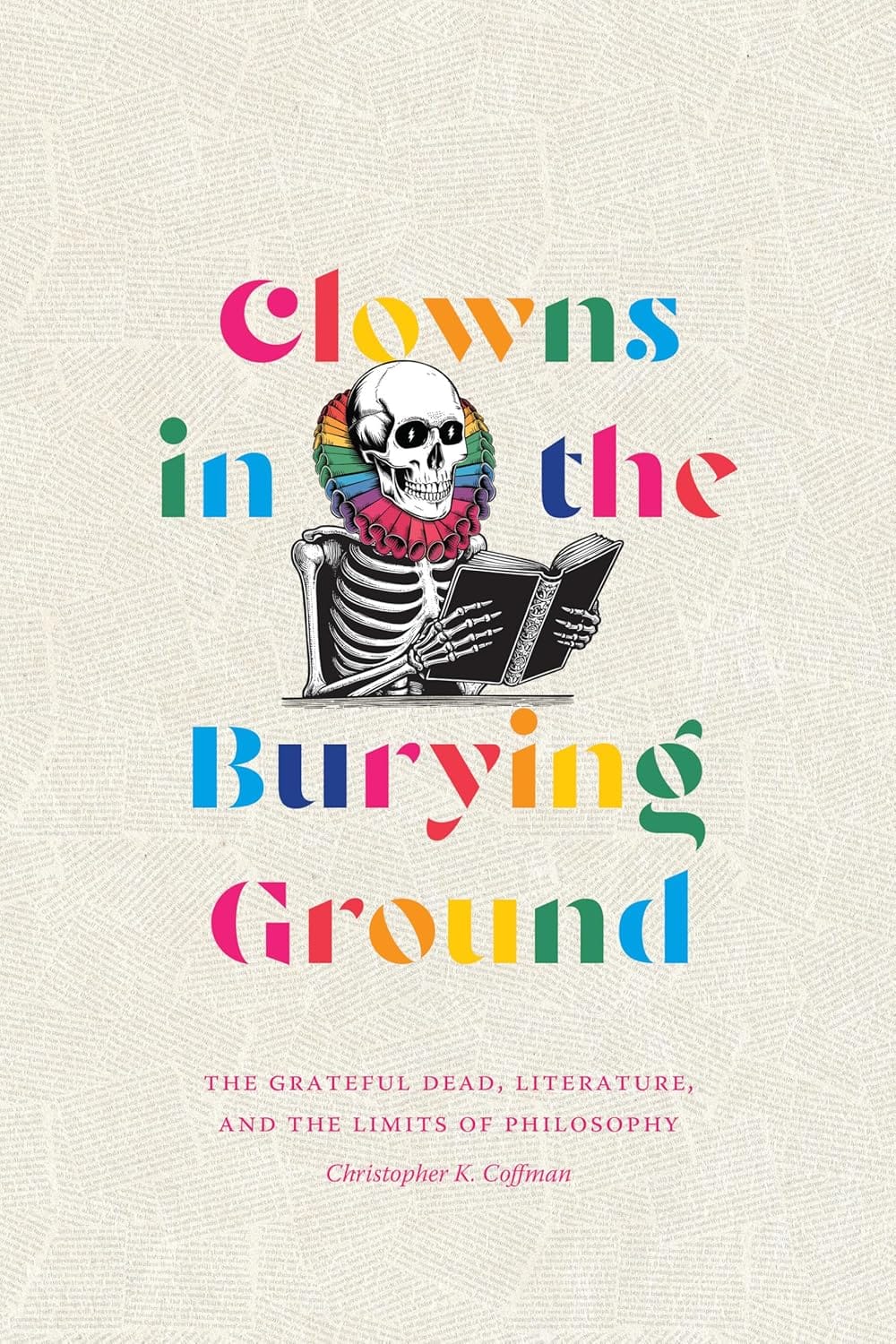
Of the making of books about the Grateful Dead there is no end, and rightly so. The band itself noodled around on stage, “truckin” down the “Golden Road (To Unlimited Devotion).” Their extended jams explored the permeable boundaries of space and time, using the spaces between the notes to anticipate the tonal shifts from bluegrass to country to folk to jazz to rock. The band built their songs in these performances—and on albums, too—out of the fragments of lyrics or notes from old-time ballads or from traditional tunes or from early rhythm and blues or rock. Moreover, these pieces might well be incorporated into other compositions during any given performance. Lyrically, the Grateful Dead plucked fragments from novels and poems, plays, and other writings from writers such as Mary Shelley, Kurt Vonnegut, Shakespeare, and Dylan, an idea which Charles K. Coffman tackles in his taut and insightful Clowns in the Burying Ground: The Grateful Dead, Literature, and the Limits of Philosophy (Duke February 10, 2026).
In fact, because of the rich intertextuality of their songs, both Dylan and the Dead themselves have become literary artifacts in an ongoing conversation about literary history and the ways that artists compose their lyrics using words or sentences from other texts both to situate their music and to connect listeners with enduring themes. For example, Robert Polito’s excellent new book, After the Flood: Inside Bob Dylan’s Memory Palace (Liveright, January 2026) explores the ways that Bob Dylan “embeds into his lyrics a Who’s Who of nineteenth-century writers politicians, scientists, and philosophers, some directly engaged in the Civil War, others for backdrop: Lincoln, Herman Melville, Timrod, Poe, Twain, Nathan Bedford Forrest, Ralph Waldo Emerson, George Lewes, and Charles Darwin.” While Polito views such intertextuality as one of the keys to Dylan’s reinvention of himself during his “second thirty years” from 1990-2020, in Clowns in the Burying Ground, Coffman performs close readings of the Dead’s songs and performances to illustrate the ways that individual members of the band, as well as the band as a whole, drew on a wide range of literary traditions to craft their music.