
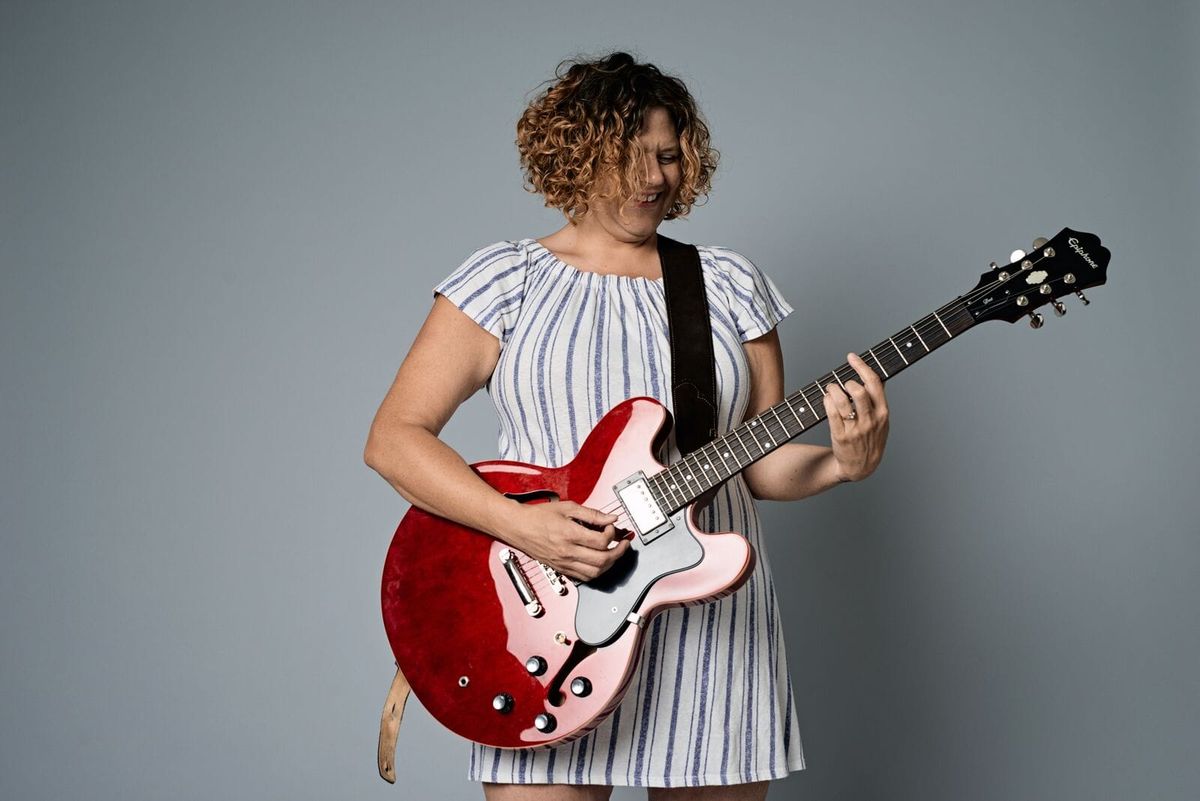
Spider Bags was loud. But Reese McHenry herself was somehow louder than the entire band.
It was July 15, 2017 at The Pinhook in Durham. Amelia Riggs was at the release show for Bad Girl, the collaborative album between raucous Durham rock and rollers Spider Bags and locally beloved vocalist and songwriter McHenry. Riggs could feel McHenry’s voice through the vibrating Solo cup in her hand. That night, like many others before her, it was Riggs’ turn to be converted by McHenry’s power and presence. It wasn’t long before they were close friends.
“I have the poster for that show hung up. I will never get rid of that,” Riggs says. “That was a core night for me.”
In February 2026, Riggs released the single “Vibrating Plastic Cup for Reese McHenry.” It opens sparse and intimate and grows slowly, as she sings of walking around in a daze on the gray, drizzly day in November 2024 that McHenry died of sarcoma. “How do you write a song that it hurts to finish?” Riggs wonders as the drums enter.
For 24 years, McHenry was a respected member of the Triangle music scene of Durham, Raleigh and Chapel Hill, North Carolina. It’s my scene, too. I was mainly involved as a music journalist at local alt-weekly INDY Week, from 2009 until 2016. Upon my arrival, I got the clear sense that I had just missed something special, as McHenry’s powerhouse heavy blues-rock band Dirty Little Heaters had recently dissolved because of her first set of health problems. I got to feature McHenry in a 2011 INDY story, as her friends rallied in support after her numerous strokes and cardiac issues. Later, I got to see her get back on her feet, as if indestructible, and making music again. She had incredible energy. If I ran into her at a show, for instance, I could never spot her first. Somehow, she was always running up to me, all smiles, a foul-mouthed hurricane of enthusiasm and warmth.
That 2009 and 2010 sense that I had missed something special faded as McHenry kept getting back on her feet, kept doing shows, kept making records, such as the Spider Bags collaboration Bad Girl and 2019 McHenry record No Dados. This whole time, she was influencing and impacting the lives of actual generations of local musicians in one of the United States’ most fertile music scenes.
In the end, McHenry went two rounds with soft-tissue cancer sarcoma — one in 2022 and another in 2024. She succumbed on November 14 of that year at just 51 years old. And though the second round killed her, as a three-time cancer survivor, I know that she did not lose her battle; she locked horns with the monsters that meant to end her. I know that every day she lived, she pulled from the jaws of certain death.
Last month, Suah Sounds released posthumous collection Forever, featuring 12 songs selected from the hundred or so McHenry was working on when she died. True to McHenry, the songs on Forever resist easy categorization, ranging from heartrending opener “Mississippi Blue” to the foul-mouthed, punk nihilism of “I Don’t Care About Nothing Anymore.” She leans rural folksy on “Birch Tree Melody,” coffeeshop pensive on “Liz Phair’s Johnny,” and steamroller relentless on catchy hard rockers “Absolution, Baby” and “Unfuck Your Friends.” Thirty more tracks are available via a download code that comes with the LP, culled with the help of her husband, Justin.
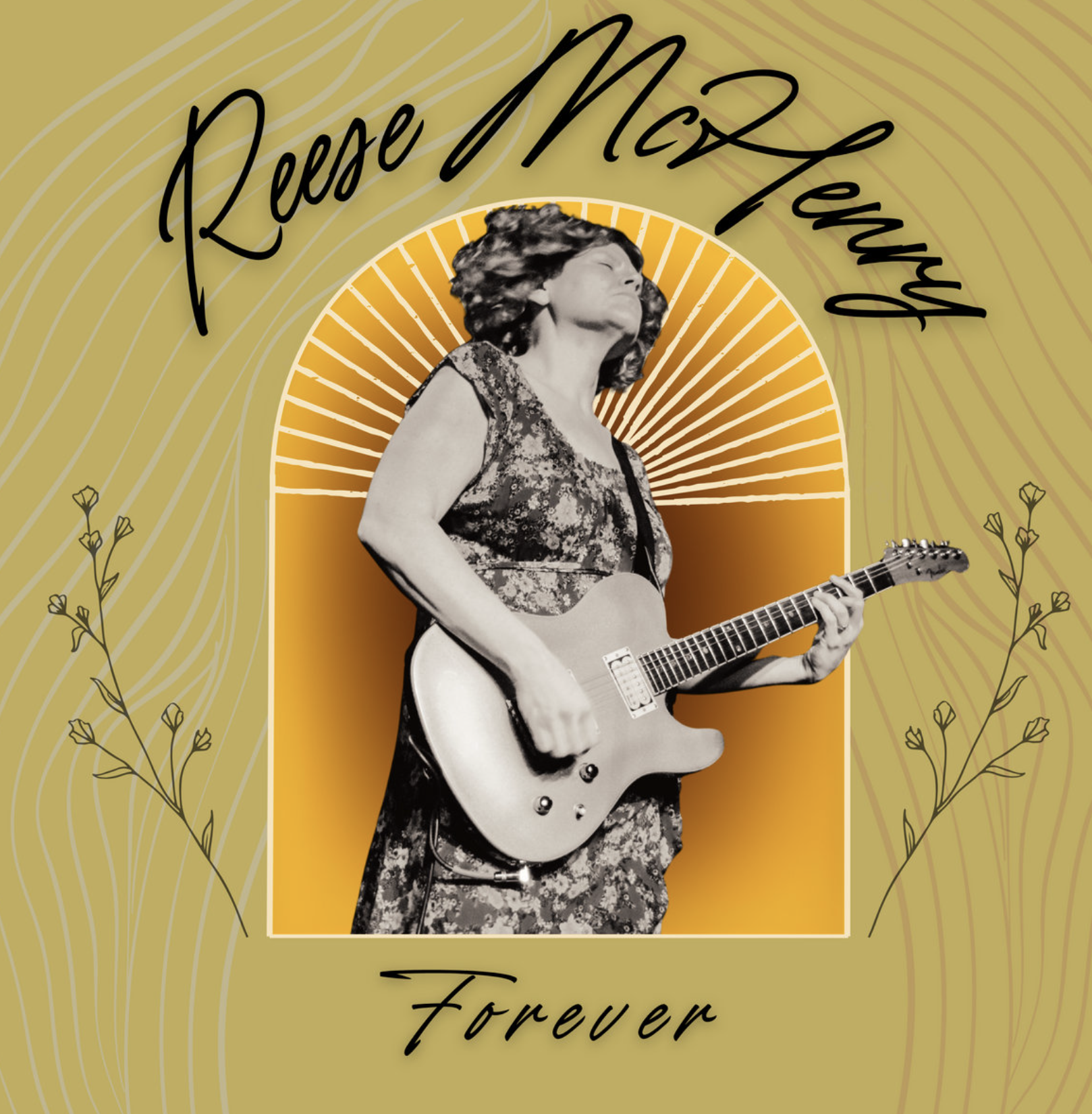
Sixteen months after McHenry’s passing, her loss still cuts deeply in the Triangle’s music scene. Her spirit and influence both resonate in the musicians, label heads, and venue owners who were her closest friends. They knew a loyal, true friend who just happened to be a generational talent.
The Triangle in the 2000s
McHenry arrived in Durham from Minneapolis in 2000. First it was to visit a family that had supported her during her childhood and early adult years — a rough era, as many of her friends attest. Then it was to stay.
Justin McHenry remembers the moment in spring 2001 when she walked into his life.
“She came through the door of the gas station [where I was working] and she whipped around and looked at me,” Justin recalls. “She had shaved her head and I’m pretty sure she was wearing overalls, which she wore a lot.”
She bought her stuff and walked out, but Justin recalls this as the moment Reese caught him in her tractor beam. Not long after that, Reese came to work at the same gas station. She and Justin became friends, and then a couple.
“I know she was in the music community and scene when she lived in Minneapolis, but I don’t know how deeply,” Justin says. “I think the community around here became that home that she was looking for.”
Just after the turn of the millennium, Chapel Hill was the musical hub of the Triangle, if not the entire state of North Carolina. Raleigh had a handful of venues, but was hardly an indie music destination. That wouldn’t come until the early 2010s. Durham was not hip yet, would not gentrify beyond recognition for a decade or so. Its music scene was a scrappy, DIY affair, which local lifers remember with incredible warmth.
“The bands from around here when she first got into this community that she really admired [were] bands like The Spinns, The Moaners and The Flat Duo Jets,” says Justin.
Not long after arriving in Durham, Reese got involved in a music collective, which became a band called The Last Nerves. They recorded an EP that Justin loves, but never really played out. Justin also remembers a band called the She-Mamas. This is where Reese met Melissa Thomas, drummer for the first incarnation of The Dirty Little Heaters.
“She was a huge fan of my band [at the time], The Spinns,” says Robert Walsh, bassist of the second incarnation of The Dirty Little Heaters and one of Reese’s closest friends for more than 20 years.
Today, Walsh is four years sober. He’s quit drinking and started working out. Still, at 55 he feels his decades of hard living and hard drinking. Walsh met Reese in Chapel Hill in 2002. The Spinns were playing Franklin Street bar The Library, but their set devolved into an onstage fistfight with each other. In the chaos of the drunken brawl, Walsh had been hit in the head with a floor tom.
“Then she came up and was like, ‘Oh my God, that was amazing. You’re my favorite band. Where are you guys from?’ And I was like, ‘We’re from right down the street,’” Walsh says. “She couldn’t fucking believe that we were from Chapel Hill.”
Aside from being hammered and pissed off, Walsh came from an era and an environment of skeptical cynicism, so he was initially resistant to Reese’s warmth and unchecked enthusiasm. Still, she invited him to see her band The Dirty Little Heaters at longstanding Chapel Hill basement dive The Cave. Walsh outwardly agreed, but inwardly ignored.
Franklin Street is Chapel Hill’s main drag, with UNC Chapel Hill at the east end of the downtown stretch and music venues like Local 506, The Cave, and the now defunct Nightlight to the west. Just over the Carrboro line is The Cat’s Cradle. Not long after that chaotic Spinns show, Walsh found himself on the narrow alleyway stairs leading down to The Cave.
“I could hear fucking music coming from The Cave,” Walsh recalls with awe that has not dimmed. “It sounded like fucking Janis Joplin.”
The Cave — a windowless, underground bar with a low ceiling — fits its name, the main entrance is directly beside the end of the room where bands play. There’s no stage, so when Walsh walked in that night, he saw Reese and Thomas’ raw, elemental set as The Dirty Little Heaters. He had forgotten about Reese’s invitation, but serendipitously caught her set anyway. He stood mesmerized, realizing he’d pre-judged Reese, and almost missed something rare and special.
“She puts her guitar down, she’s running up, and she's like, ‘Oh my God, you fucking came! You remembered!’ I was like, ‘Yeah, dude, I wouldn’t miss that,’” Walsh says with a chuckle. “We were thick as thieves ever since.”
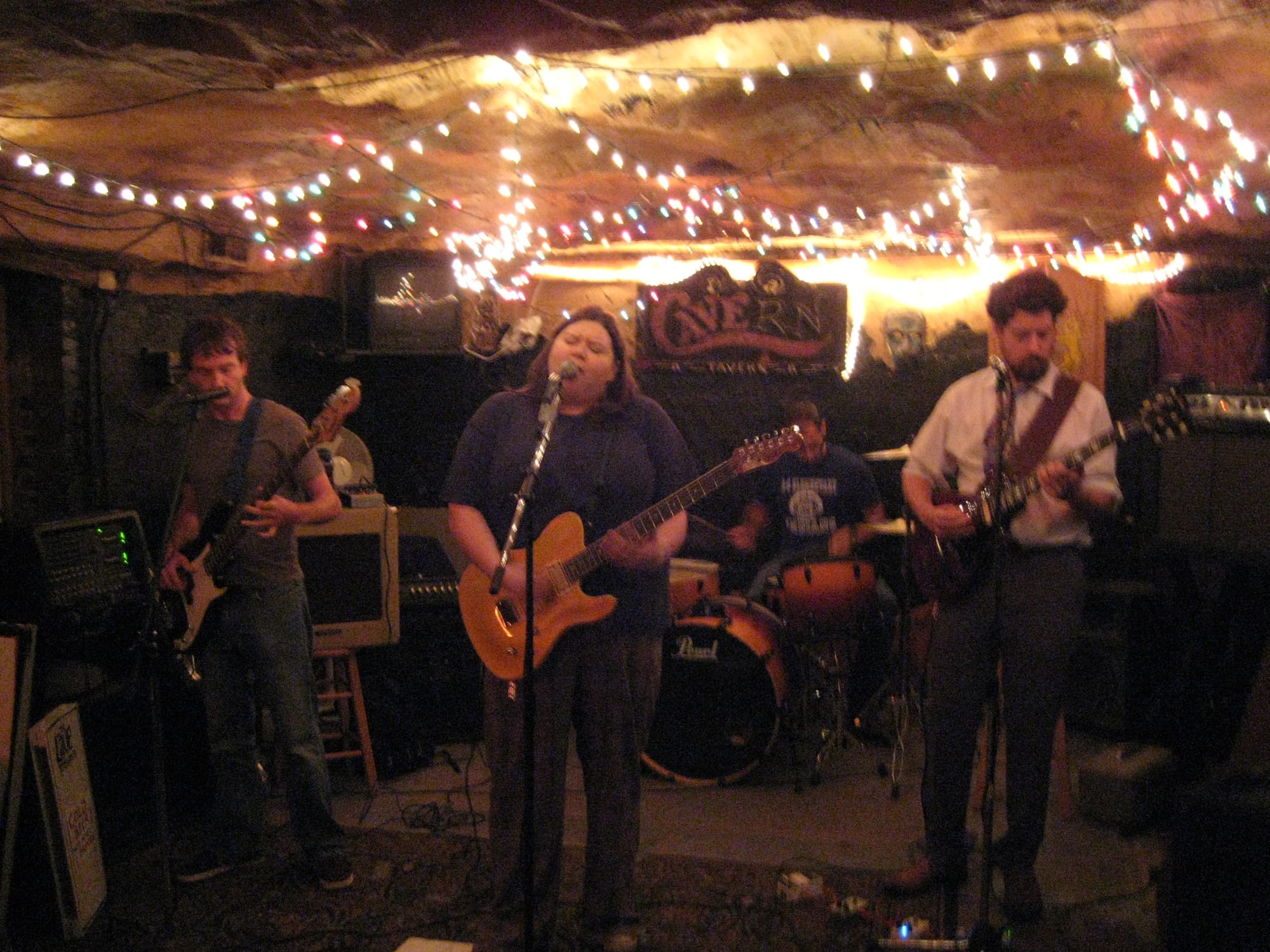
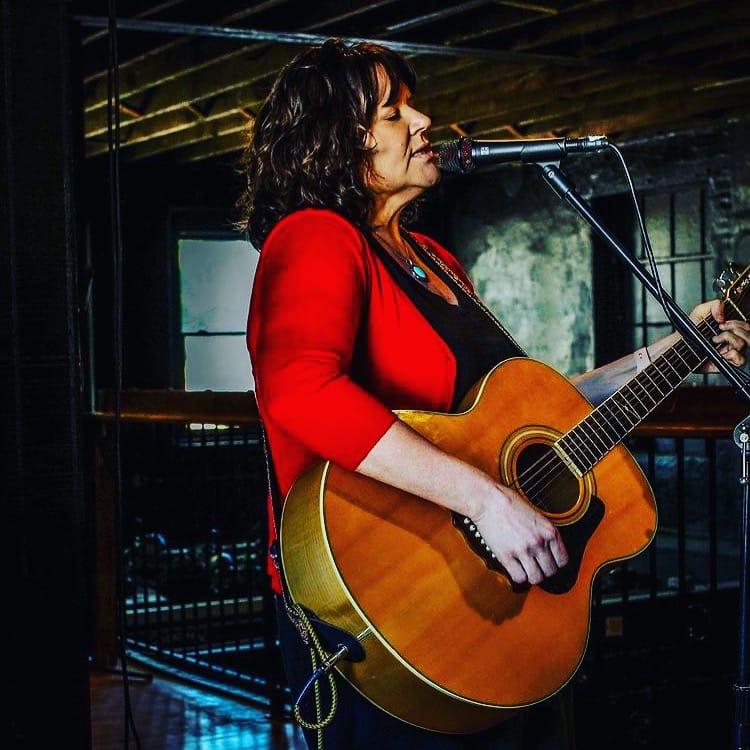
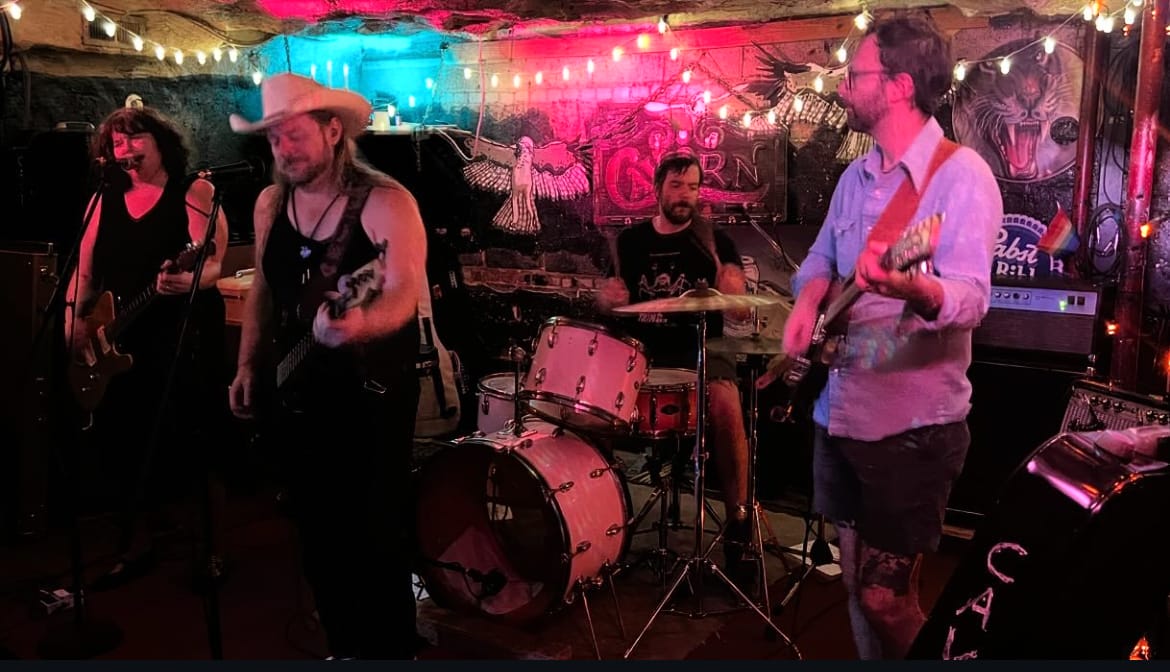
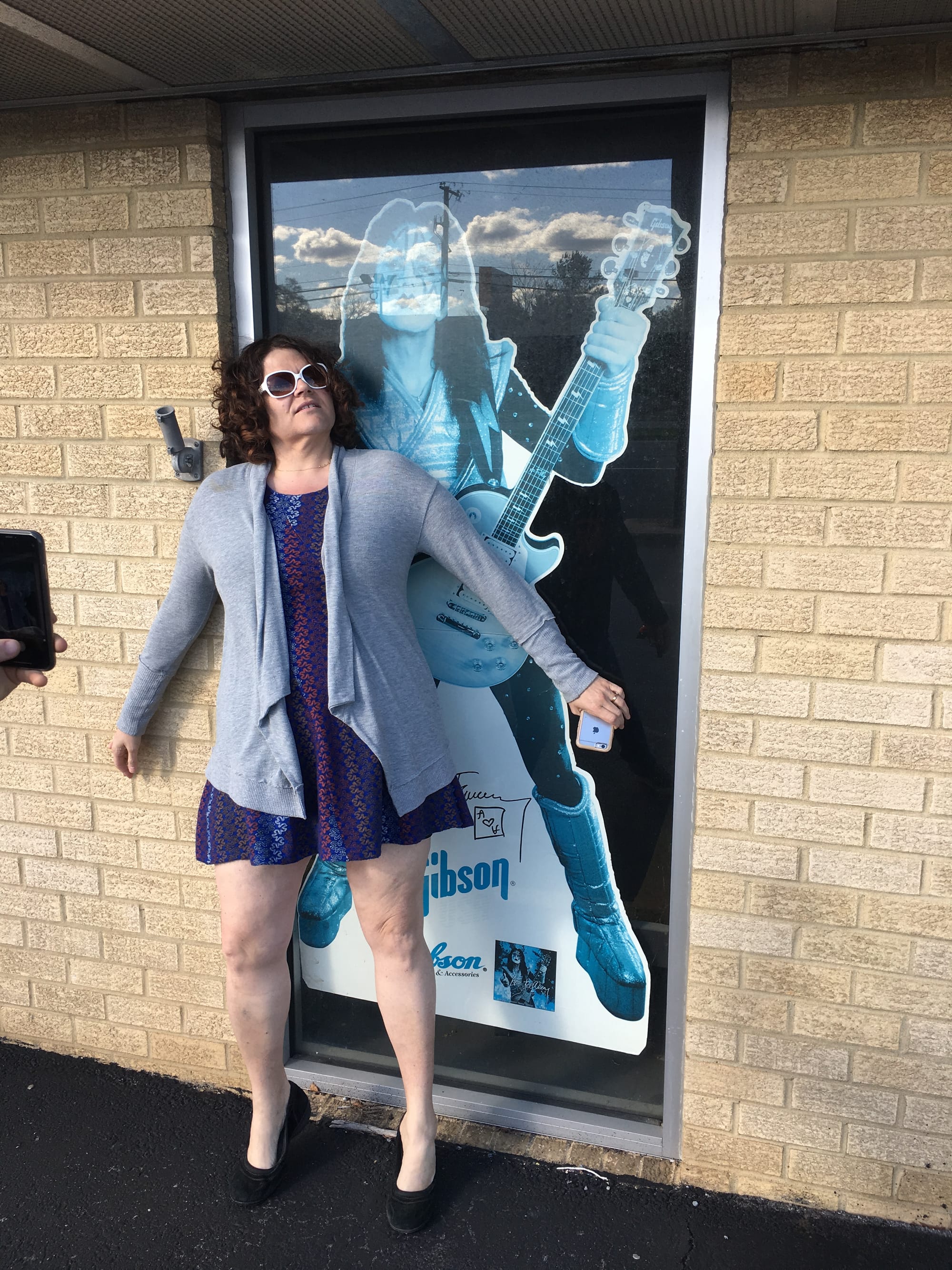
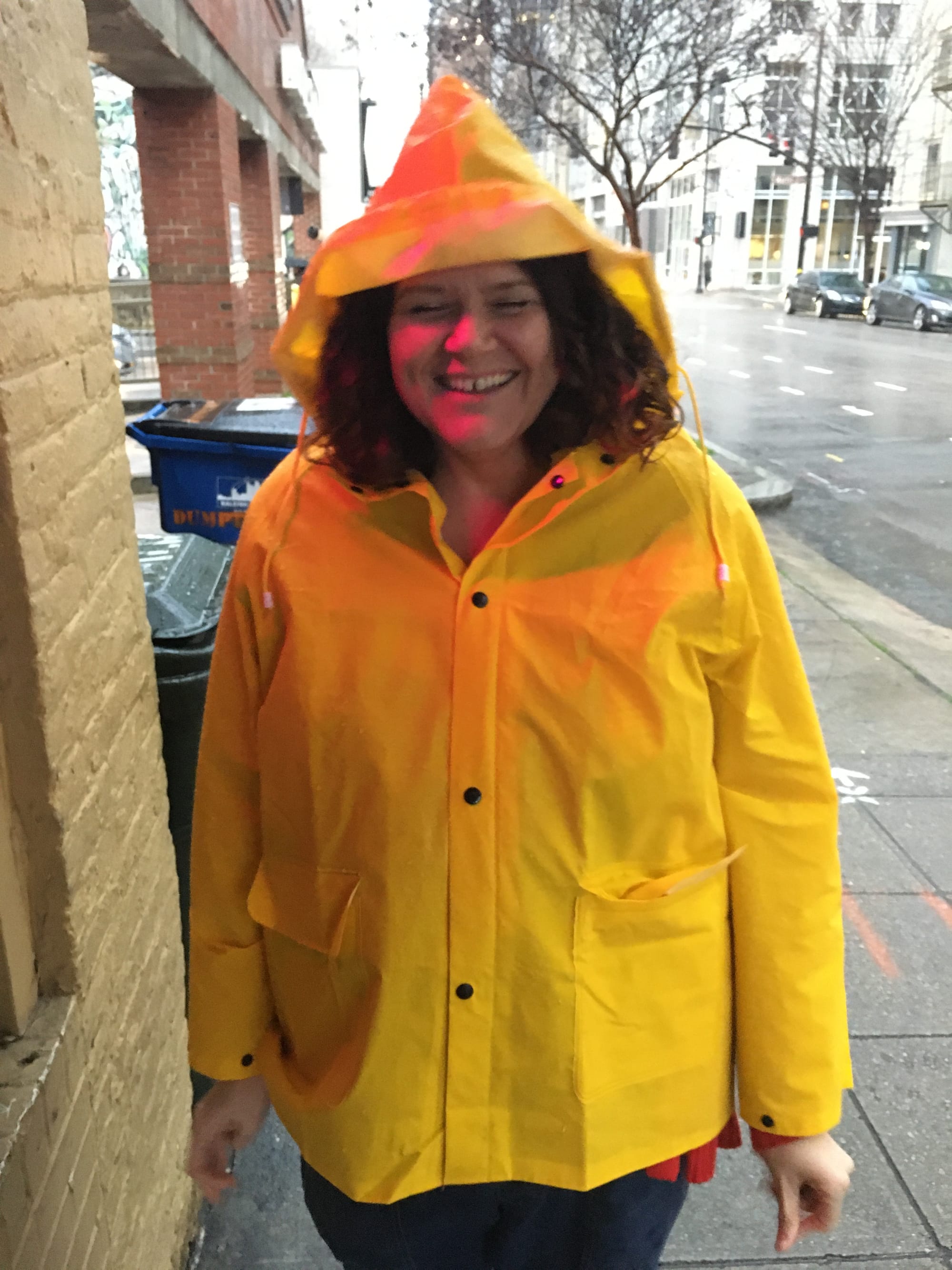
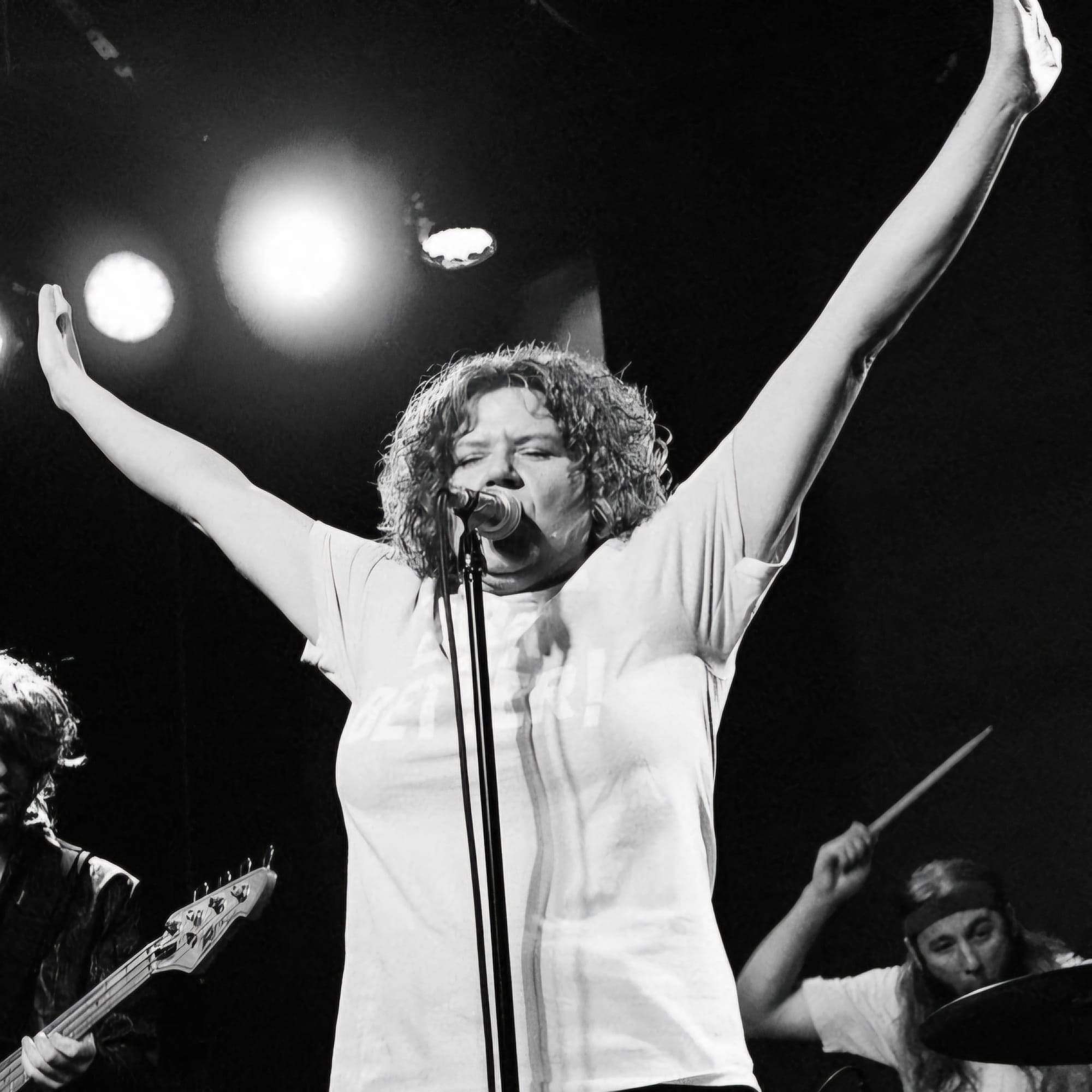
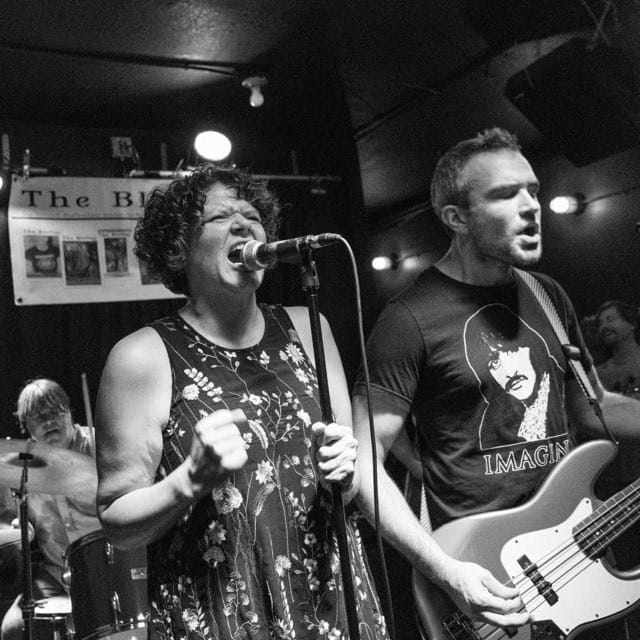
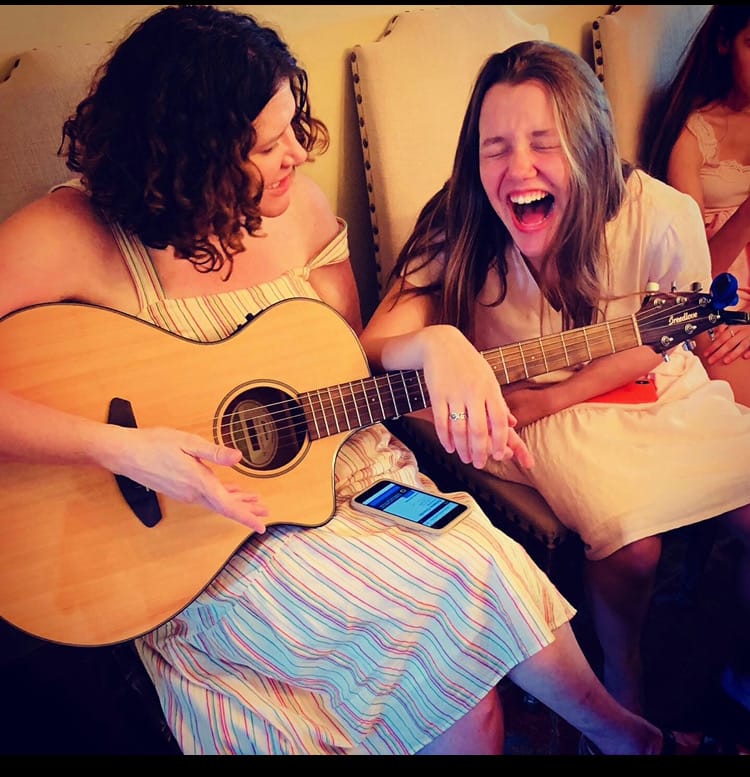
Photos of Reese McHenry from the Forever collage - Courtesy of Suah Sounds
Finding Her Tribe
Dan McGee, guitarist and vocalist of Spider Bags, landed in Durham from New Jersey in 2006. Living in Durham he heard Dirty Little Heaters on one of the college radio stations. He’d heard of her from other local musicians. Eventually, Spider Bags and the Heaters played together at a single release show in Durham.
“When you’re a musician, and you see somebody playing music that is on the same page that you are, it cuts through so much of the bullshit of meeting somebody,” he says. “You know right away, we’re on the same team.
Spider Bags’ bassist Steve Oliva believes he met Reese in 2008 or 2009: “It was at the [Local] 506 and Reese was wearing her awesome Led Zeppelin T-shirt,” he says. “It was just her and Dave Perry and Rob Walsh. [Dirty Little Heaters] were the toughest band I'd ever seen.”
Oliva was in a band called The Dry Heathens at that point. He and Reese were part of Durham’s music scene, a scrappy little village of rockers and punks with names like Pink Flag, Red Collar, and Future Kings of Nowhere. There weren’t many clubs yet and the same musicians were attending each other’s shows on a weekly basis.
“You were trading the same $200 back and forth between all the same people,” Oliva recalls.
Even within a scene built on mutual support, and even at this early point, there was a sense that Reese was different. There was her powerful voice, which even the most disaffected alt-weekly writer would compare to Joplin or Robert Plant. And there was her stage presence, which could bring arena rock electricity to a weeknight show at the dingiest dive. McGee knew he needed to make a record with her.
One day, probably in 2009, McGee was driving home from work. He let a work van pass him and the passenger reached out the window to wave thanks, revealing an arm covered in paint. McGee used to paint houses as a kid, so he remembered what that was like. When he got home, the lyrics to “Painter Man’s Blues” came out, basically all at once. Maybe I can give this song to Reese, McGee thought.
“It sounds like a story, but she literally called me a couple of hours later. ‘Hey, it’s Reese. Do you want to make a record with me?’” McGee remembers. “She said, ‘I just want to make a good record before I die.’”
Initial Health Issues
This was Reese’s first close brush with her own mortality. Between multiple strokes and congenital heart failure that filled her lungs with fluid, she had been to the Duke University Hospital emergency room about 60 times between 2008 and 2009. She and McGee decided to make what would become the Spider Bags and Reese McHenry record Bad Girl, but between her health and McGee’s growing family, and his schedule with Spider Bags, the process took more than seven years. It was finally released July 14, 2017 via Sophomore Lounge.
From those years, Reese’s friends remember the tortures she endured, of course, but mainly they remember a woman who laughed in the face of terrible odds. Reese was uncommonly funny, and her sense of humor was as dark as her luck.
“We were putting together a [medical bills] benefit for Reese. One of her various things had happened. It was at the old Broad Street Café,” Oliva says, recalling one of Durham’s many lost venues. “She was hanging some [of her] paintings that were going to be for sale as part of the show. She said to me, ‘Jesus, Steve. It would be so much easier to advertise this thing if I just had cancer.”
Reese’s reputation within the Triangle music community had already become one of enthusiastic respect for her talent, but in the 2010s it evolved. She became the person who could not be knocked down, physically or spiritually. She kept smiling, kept laughing, kept loving her friends. Yet she never pretended it was easy.
“Maybe four years into making the record with Reese, we still needed vocal takes on a lot of the songs,” McGee says. “We had set aside a day when we could have Reese in the studio.”
It was the middle of the summer, and hot days were tough for Reese at this point. She had recovered from the strokes, but the heart problems regularly left Reese with fluid in her lungs.
Even a few years after the initial diagnoses and treatments, she was in rotten shape physically, and a humid North Carolina summer day could make breathing a challenge.
Still, she came in and scorched through vocal takes for five songs, leaving McGee in awe. During the session, he showed her the arrangement he had worked out for the song “Concrete Roses” just the night before. It was too late to teach the band, so they cut the song live. McGee played acoustic guitar while drummer Rock Forbes played a pizza box with jazz brushes. And Reese delivered a vocal performance that, more than a decade later, still haunts McGee.
“It was one of those moments in the studio. [You have] goose bumps and the hair on the back your neck is standing up,” he remembers. “Rock was trying not to break into tears during the take. And so was I.”
Musical and Physical Persistence
Years after Walsh’s life-changing stumble into a Dirty Little Heaters show at the Cave, Michael Venutolo-Mantovani had a similarly powerful experience. In 2016 he had moved from New York City, where he had worked for Matador Records, to Chapel Hill, seeking a quieter, kinder place. His band The Everymen had played The Cave numerous times, so that’s where he was hanging out, shooting the shit with Reese’s future bassist Mark Connor, when she plugged in and launched into yet another memorable solo set.
Afterward, at the merch table, Venutolo-Mantovani told Reese that he wanted to release her next record. He didn’t have a label yet, but he was a music industry veteran and wanted to put more of her music out into the world. “Yeah, you can do that,” he remembers Reese saying.
“There really was no evolution,” Venutolo-Mantovani says. “Right away, we just felt close.”
Venutolo-Mantovani’s dad retired and helped him fund a new label, Suah Sounds, named for Venutolo-Mantovani’s mother. Local honky-tonk crooner John Howie Jr. had a record ready to go, so Venutolo-Mantovani released that first. By 2019, Reese’s album with her own band was ready, so Suah Sounds put out No Dados on April 12.
Even after making a record with Spider Bags, awareness of Reese outside of the Triangle could be sparse. Audiences on the road would be five or 10 people. Reese was unassuming and carried herself very casually, recalls Thomas Swinn-McNeely, who played drums on No Dados and was in Reese’s band for the rest of her life. Yet as soon as she was onstage, the switch flipped. And even if there were only a few people at the show, they would invariably all buy merch.
McGee and Oliva, for their part, remember watching the audience shift during any out-of-town show Spider Bags did with Reese. Even if Spider Bags had played a city a few times and built an audience there, McGee and Oliva would gleefully witness Reese convert audiences to be her fans too.
“[You could feel] the vibe shift towards her the longer she’s onstage with us — people rooting for her, just naturally feeling like they love her,” says McGee.
“The same thing happened anywhere in the country that I was, that I ever saw Reese, whether it was here or Texas, New Orleans or wherever,” Oliva says. “When Reese was singing, the room was at attention.”
Just three years after No Dados was released, Reese was first diagnosed with a sarcoma in April 2022. Reese came out of cancer number one that year with a drive to play out and write. She had a notebook with more than 100 songs in it and would play anywhere for any number of people.
“That was just so bad,” says McGee. “She did beat it, and she came back, and she was playing every night, anywhere. She just jumped out of a cannon.”
In 2024, the sarcoma came back. Even near the end, she was choosing to spend her time with friends like Riggs and conspiring with McGee on another record with Spider Bags. Her friends felt the same loyalty, and Walsh was at an unconscious Reese's side the day before she passed.
A Fitting Tribute
Amelia Riggs spent the weeks leading up to the Reese McHenry Forever tribute show on March 1 buried in a deep, physical depression. Unemployed and crushed by the leaching away of her rights and healthcare as a trans woman in the United States, she could hardly get out of bed.
My own immune system had bottomed out around that time, so my friend and fellow journalist Ben McNeely — brother of Reese’s drummer Thomas Swinn-McNeely — went to the Forever release show in Durham on March 1 on my behalf and provided valuable background. He described a packed Motorco Music Hall, full of love, and punctuated by the tears of friends honoring a fallen comrade. Reese’s band (Connor, Swinn-McNeely, and Mike Wallace) backed up friends singing Reese’s songs. Some presented songs they had written and others sang covers that were reminiscent of Reese.
During the show, Riggs watched her friends play but could not focus because — like most people there — she kept breaking into tears. “I go out onstage and we play my [original] song, and it goes very well,” Riggs says. “Then I put the guitar down and we go into ‘White Bear Incident.’ The song begins and I don’t know what the hell is going to come out of my throat.”
Suddenly, Riggs was howling, screaming, belting out her friend’s song. She hit notes she never dreamed she could reach for. She felt an unfamiliar, cathartic power. It was like Reese took the wheel.
“It felt like the last few weeks didn't happen,” Riggs says. “It felt like all of the sadness and fear and frustration was just gone in those three minutes of channeling Reese's energy.”
Ohio alt-country artist Lydia Loveless lived in the Triangle from 2017 through 2021 and became close friends with Reese, who had Loveless’s back during a rotten breakup. Loveless returned to Durham for the tribute show to honor a true friend. “Singing Reese’s songs is a huge undertaking,” says Loveless.
She and Reese had a fittingly dark joke: If one of them died, the joke went, the other should take over her band, pretend the other never existed, and be a huge diva about it. And now Loveless was in the position of learning her beloved friend’s complex lyrics and difficult phrasings and fronting her band. It was special for Loveless to spend time with the band and dig into Reese’s lyrics. Loveless sang the last five songs Reese recorded with her band — “Sealed Envelopes,” “Cosmopolitan,” “Unfuck Your Friends,” “Absolution, Baby,” and the defiant anthem “I Do What I Want.”
McGee wanted to do “Concrete Roses,” but he couldn’t finish it. He tried twice, but he cried each time he came to the lines “And it is a fable / a cautionary tale / for little girls and little boys / who know their voice is in the wind.” Even mixing the record, years ago, that song would overwhelm him. Now, years later and with his friend gone, he could not finish “Concrete Roses."
“That’s the heart and soul of [Bad Girl],” McGee says.
Adds Oliva, “That record is going to stand the test of time.”
Sarah Ward, who formerly performed and recorded to local acclaim as s.e. ward, couldn’t bring herself to attempt Reese’s songs, so she wrote one. She had not played live since September 2020 and had not written music, either. Now five-plus years sober, she was terrified to reenter that part of her life. As she said yes to the show, she could feel Reese kicking her in the butt, telling her to get back out there. Writing a song again freed her to reconnect with that part of herself.
“It was like I was creatively constipated,” Ward says, cracking up because this is the kind of gross humor her friend would have loved. “Reese was the laxative that I needed.”
Ward is not rushing to write a new album, but she feels like a musician again. And at the show, she felt a different kind of awe as she watched the people who loved Reese play songs of hers or songs for her. Each one of them represented a different facet of their beloved friend.
“It was like she was the light that was shining at us, and we were the disco ball, refracting it into the room,” Ward says.
Carrying The Light
“Life was never easy on Reese,” says Justin. “She was powerful, but she was very vulnerable … She was really good at seeing people, especially when they needed it.”
When Reese needed seeing, needed reassuring, Justin would remind her of the caliber of musicians who were happy to play music with her — people like Walsh, a powerhouse heavy metal bassist who now owns Local 506.
“I’m not doing it for the fucking riches,” Walsh says, gesturing around his basement efficiency apartment not far from Franklin Street. “It’s important to have independent venues so people like Reese McHenry can fucking dominate.”
Plus, Reese introduced Walsh to entire communities he hadn’t been exposed to, to queer punk bands and drag shows in Durham even before LGBTQ-forward downtown venue The Pinhook opened in 2008.
“She was the model of the kind of woman I wanted to be,” says Riggs. “[She was] beautiful and angry and emotional and a shit-kicker, and just so incredibly powerful and good and honest.”
No matter what was going on in Reese’s life, she would play a show for two people like a show for 200. Once, when she was playing a house show at Riggs’ old place, the power went out. Reese did not quit.
“She’s bathed in candlelight and phone light, and she’s singing these heartbreaking songs with that fucking jackhammer of a voice,” Riggs says. “She took what she did seriously all the time, even playing at my fucking house.”
McGee survived a brain aneurysm in April 2025, mere months after losing his friend. Now that he’s had a close look at his own mortality, he’s thought about Reese a lot. She was his north star during his weeks in the ICU and ensuing recovery.
“A lot of my own confidence is bluster,” McGee admits. That Reese trusted him with her music, and that Reese liked his music and believed in him, helped build a truer, more intrinsic confidence within McGee. And now, as he learns to live with his own brush with death, he is still following Reese’s example.
“Humanity is flawed, and people are fucked up, but everyone has some sort of light in them, basically,” Loveless says. “I've just tried to carry a lot of those aspects of her with me and just try to be a kinder, gentler person.”
What an incredible feeling, says Ward, to be looked at with such love. Reese made Ward feel like the most important person in the world, even at her lowest. How beautiful to have had her as a friend and how unspeakably tragic to have lost her at 51. Many of Reese’s friends independently suggested that she was just getting started.
“Her death broke me,” Ward sobs. “How could somebody so good and so incredible and so magical be taken away from us?”
“She changed my life,” Ward continues. “And I saw her change other people’s lives. And it was joy, despite the fact that she had this thing that was eating her alive.”
Reese McHenry's Forever is out now via Suah Sounds.

![SPOTLIGHT: Reflections On The Inevitable Folly Of Naming Things, Or Whatever [ESSAY]](https://storage.ghost.io/c/18/d0/18d08e58-3b1b-4720-ae25-a31b44e69d4b/content/images/size/w720/2026/09/Jude-Brothers-Spotlight-Photo.png)
Comments ()