Editor's Note: Erin Osmon has been awarded one of two No Depression Criticism Fellowships to write in-depth album reviews on roots music's most important albums. Read her previous review of Roger Miller's A Trip In The Country here, and stay tuned for more from both No Depression Criticism Fellows all year long.
Since the advent of popular music, female musicians have been held to impossible standards — to rules and principles that undoubtedly change when applied to their male peers. Though the goal posts around these standards are constantly shifting, women in music have historically been expected to behave. For those female singer-songwriters who’ve been loosely categorized as a “folkie,” the purity tests are nothing short of wild.
Judy Collins and her famously pellucid voice was lambasted for being both too pure and not crystalline enough when she began covering artists like The Rolling Stones and Stephen Sondheim in the 1970s. After the gargantuan success of the folk-rock album Court and Spark, Joni Mitchell was dubbed a willfully obtuse jazzbo when she followed her muse to The Hissing of Summer Lawns. Jewel was a sell out for making a pop album. Sinead O’Conner was crazy for speaking out against the Catholic church. Joan Baez was too consistent in her general opposition to war and racism, a late-1960s double standard interrogated with the greatest of metatextual empathy by Joan Didion and no other writer. The Chicks were boycotted in country music for ages after speaking out about George W. Bush and the war in Iraq.
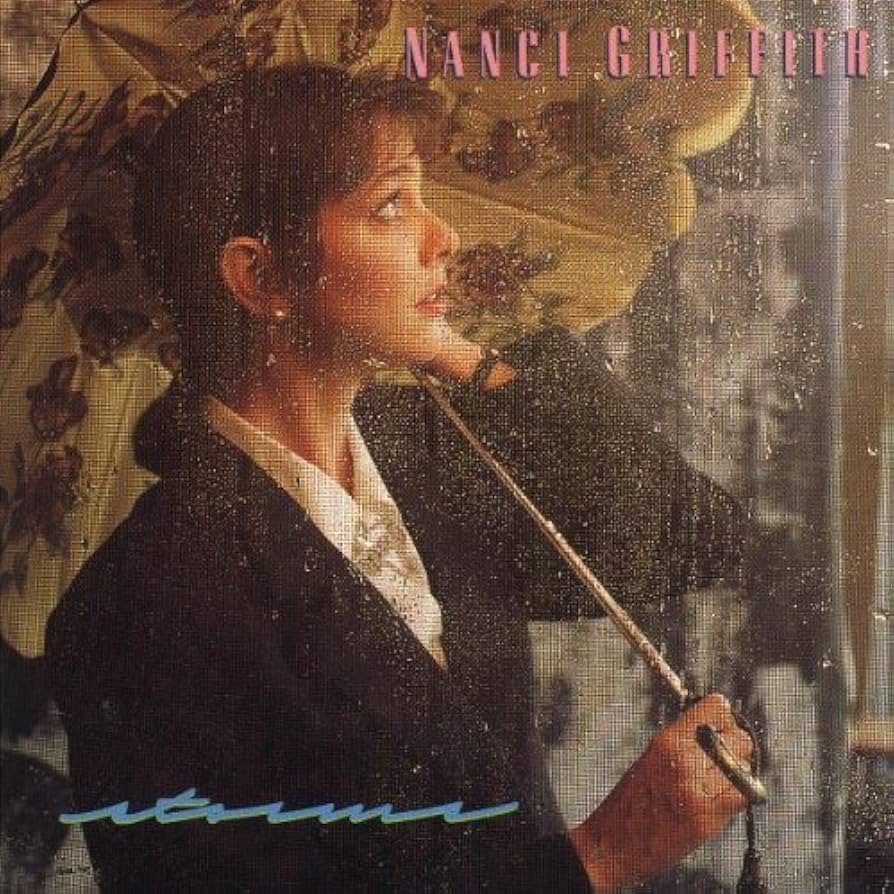
With these and so many other examples, it should come as no surprise that Nanci Griffith’s Storms, released in August of 1989, was met with doubt and even mild ire. After crafting a series of critically acclaimed country-folk albums, Griffith’s turn to synthesizers, gated-reverb drum sounds, a sampling system, and celebrated English producer Glyn Johns placed her in the canon of beloved folkies who’ve dared to try new things. Griffith’s Texas-specific literary intelligence, exuberant singing, acoustic instruments, and general sparkle remained throughout Storms, and these modern tools and esteemed collaborators simply augmented them. The reaction to the change was a resounding assumption that Griffith was now tainted. In the eyes of the cultural cognoscenti, she was no longer pure.