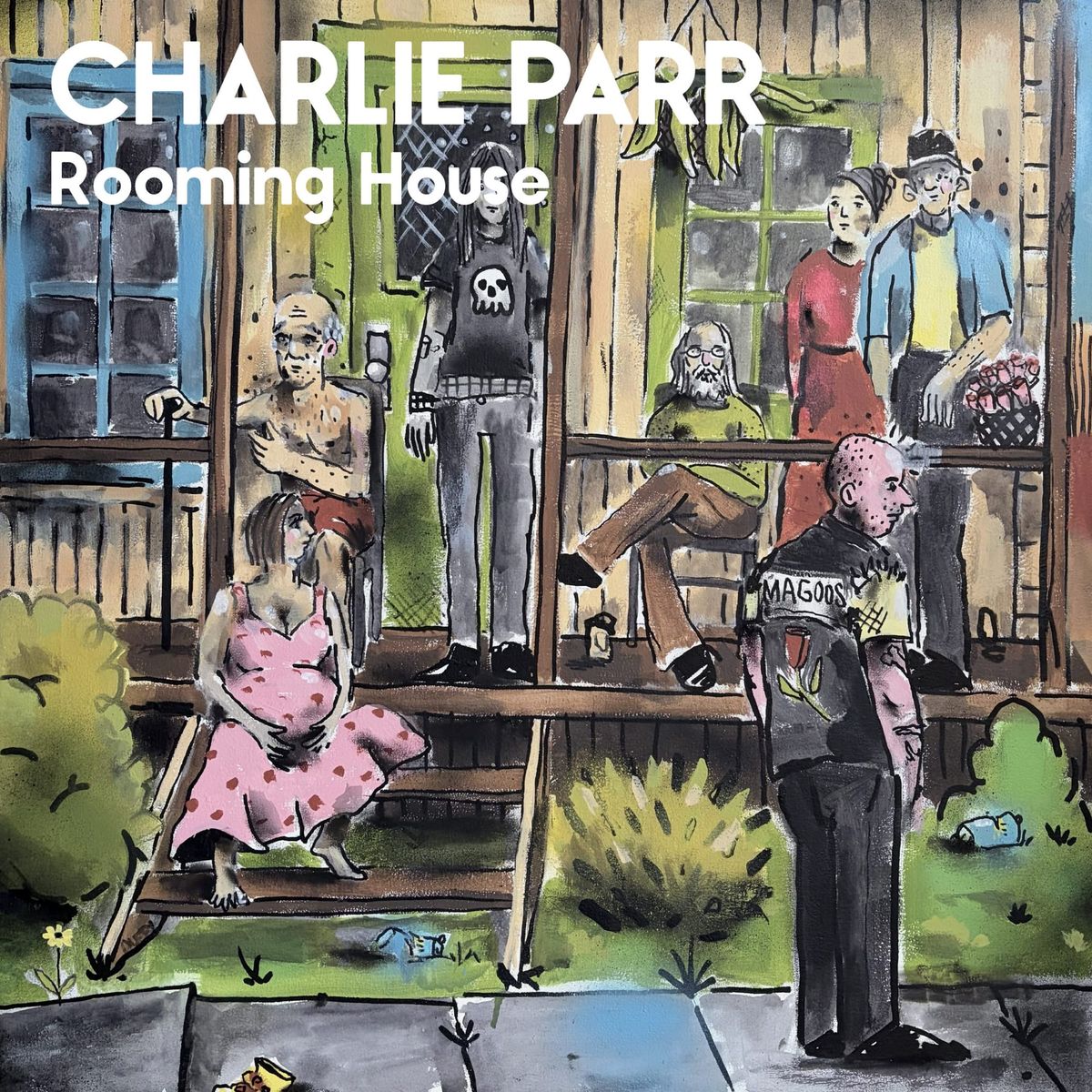
For over two decades, acoustic blues troubadour Charlie Parr has anchored his career in the hardscrabble realities of ordinary lives, translating grit, folklore, and working-class history into fingerpicked poetry. On his conceptual folk opera Rooming House, Parr delivers what is arguably the most ambitious and socially vital work of his storied career. Grounded in his own early memories of living in Minneapolis rooming houses, the seven-song cycle serves as an intimate, unflinching snapshot of modern-day America caught in the tightening grip of economic insecurity.
Parr possesses a rare gift for painting vivid, moving pictures through a primitive, deeply expressive style of guitar playing — utilizing a modified Gretsch 12-string and a 7-string Mule resonator — that locks into a visceral, spontaneous dialogue with jazz drummer Dave King (of Bad Plus fame). The rooming house itself emerges as a central character throughout the narrative, anchoring the album's scope from the opening cut, "Duluth 1964," through the title track, and then fast-forwarding to present day with “Duluth 2026.” Across these parallel tracks, the house functions as a living organism and a defining, protective confine where one of the narrative’s main characters, John, grows from an abandoned 12-year-old child into the caretaker of a makeshift family.