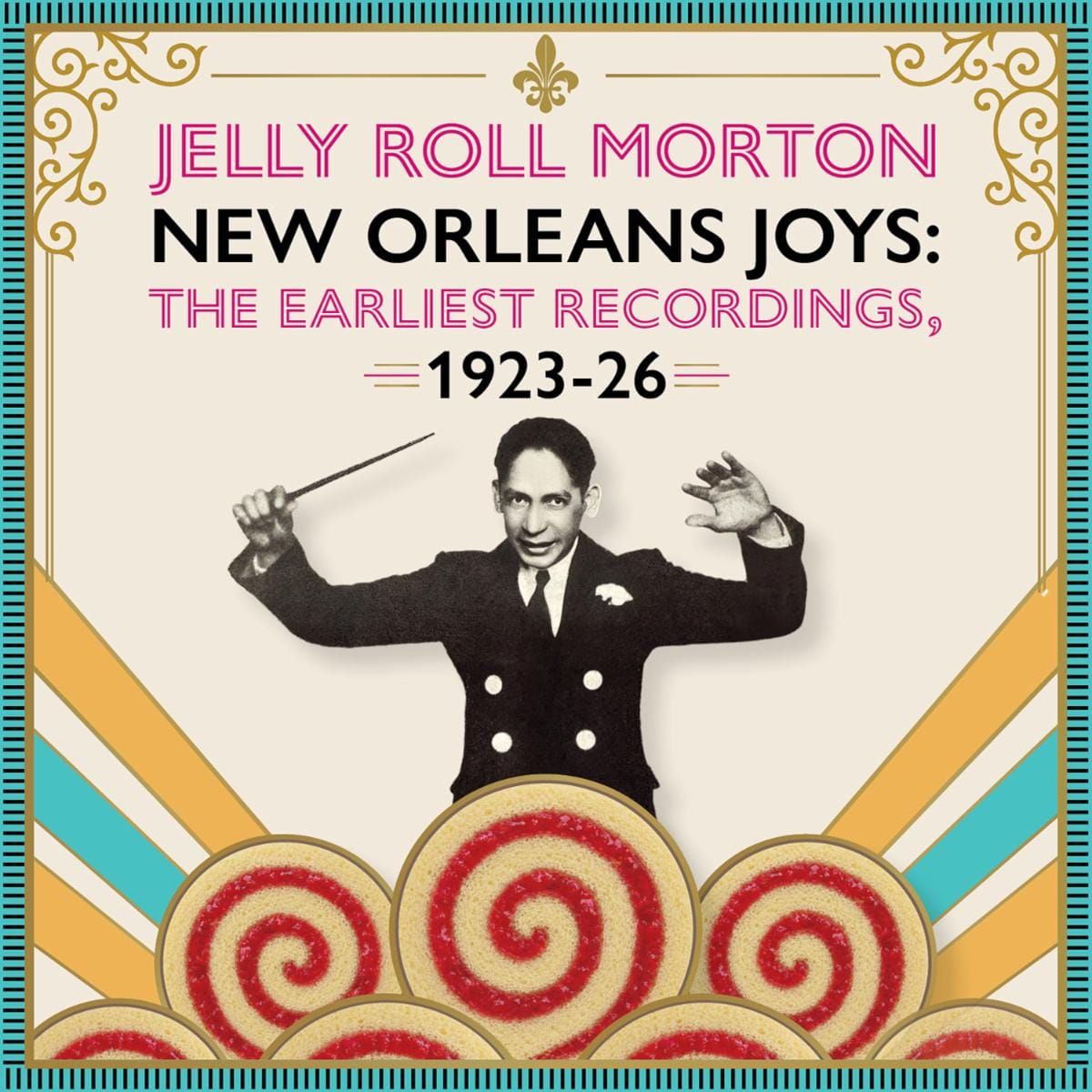
Born in the Creole community in New Orleans in 1890, Ferdinand LaMother “Jelly Roll” Morton absorbed various musical influences that he eventually combined in his own signature styles. He started playing guitar around age seven, switching to piano at age 10, always alive to the diversity of sounds that emerged from the French Opera House and the ragtime rhythms he picked up from a local pianist. Moving to the thriving music scene of Chicago in 1914, Morton published his first song, “Original Jelly Roll Blues” in 1915. A few years later, in June 1923, he went into a recording studio in Chicago and over the next three years recorded 54 performances, as a soloist and a sideman and a band leader, which appeared on five different labels. Now, thanks to New Orleans Joys: The Earliest Recordings, 1923-1926, an expertly curated and collected 2-CD set, we have 53 of those performances that showcase a musician constantly pushing into new territory and developing the contours of jazz that would deeply shape later jazz pianists.
The opening track, “The Pearls,” could easily be the first example of jump blues with its arresting rhythmic structure providing the counterpoint for its ragtime melodies. The strolling rhythms of “King Porter Stomp” demonstrate riffs Morton uses as his rolling left hand trills respond to his cascading right hand runs. “Tia Juana” ambles along in a toodling fashion until he introduces a bossa nova rhythm about halfway through the song, while “Mamamita” also incorporates Latin dance rhythms in its structure. What’s striking about this song is the fluidity of Morton’s left hand in providing a melodic line to which his right hand notes respond in playful fashion.