Some of the biggest Americana artists right now have surprising ties to a little-known folk punk community that’s fueled the genre in secret for more than 20 years. The musicians who built this scene came out of anarchic, underground communities tied to radical politics and activism, train hopping and street performing, and an honest love for acoustic American roots music.
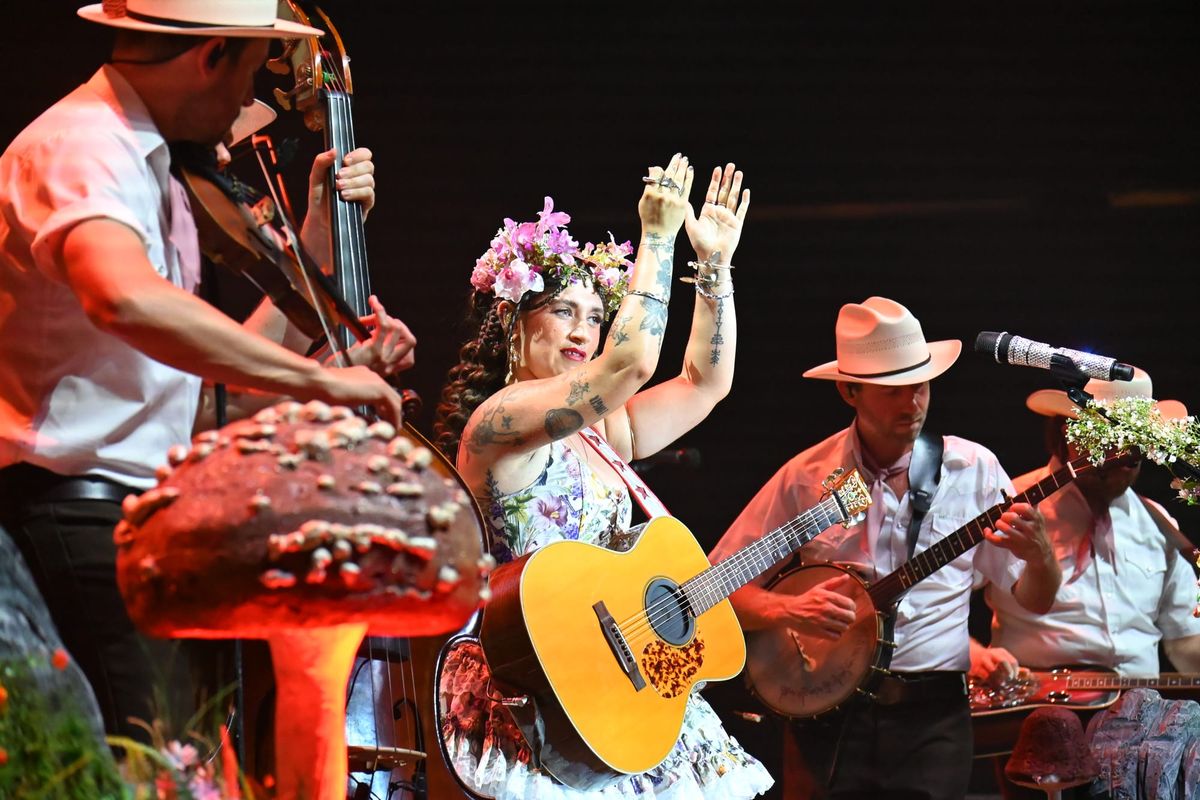
At times, it’s more of a lifestyle than a musical genre — performers and buskers often dressed in all black or olive gray, maybe a dog in tow, tattoos, piercings, ragged hair. They have many names, some pejorative – gutter punks, crust punks or “crusties,” oogles, travelers. Americana stars like Sierra Ferrell, Nick Shoulders, The Devil Makes Three, Hurray for the Riff Raff, The Deslondes, and Lost Dog Street Band, all have emerged from these communities. Sonically, these artists today have often moved on from their folk punk roots, but aspects of the music and the aesthetic remain, from Ferrell’s jazz-tinged New Orleans vocals to Hurray for the Riff Raff’s political activism.
Ferrell in particular has exploding on a national level lately, having won every Grammy award she was nominated for last year. And though the mainstream is embracing her music, many are learning about folk punk traditions through her work. In fact, much of her old community still seems to stand behind her. As one person commented on Ferrell’s Tiny Desk concert: “I remember being a dirty traveling kid with her. If she ever sees this, Sierra we are so proud of you, you did it.”
Defining a Scene
Folk punk can be a difficult genre of music to define. Even the name is usually disliked by the artists in the scene. The music takes inspiration from a dizzying range of influences, everything from Appalachian fiddle to Black jugbands, from Romani folk to New Orleans jazz singing. Essentially, folk punk is rough-edged roots music played on acoustic instruments but driven by the ferocity, speed, and aggression of punk. Some artists were specifically influenced by the anarchist politics, radical environmentalism, and hard-driving blend of speed metal and punk known as crust punk. Key early inspirations are generally agreed to be the first two self-titled, acoustic punk EPs from Against Me! (released in 1997 and 1998) and Florida band This Bike Is a Pipe Bomb’s 1999 album Dance Party with…. Before that, early British artists in the 80s like Patrick Fitzgerald and Chumbawamba laid the groundwork. For Luke the Folk Punk Archivist, who runs a popular Instagram page documenting the music’s history, it’s not the genre itself that ties everyone together. ”What I based my project around,” he explains, “was the idea of folk punk being a community rather than a sound.”