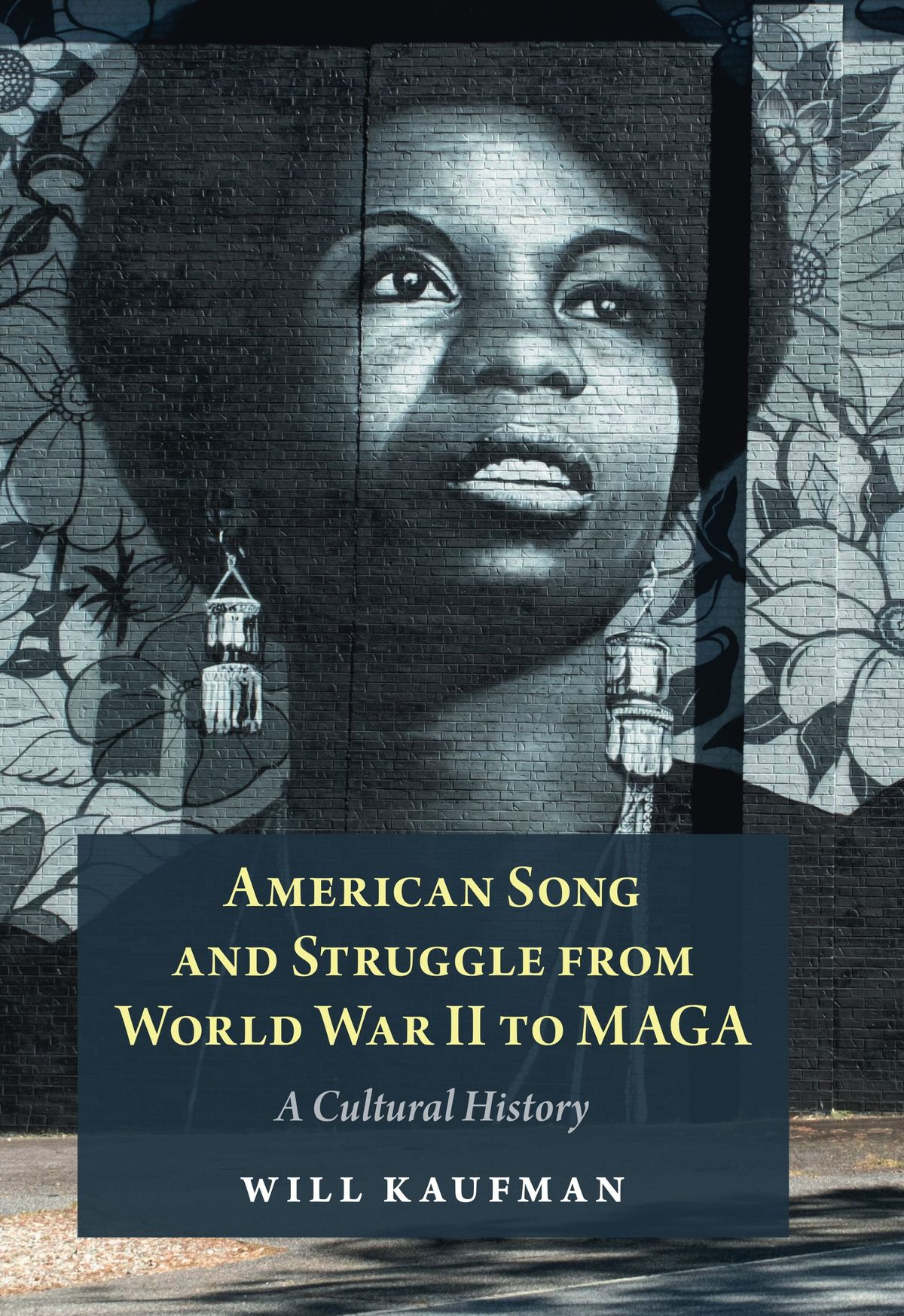
“Life is goin’ round in circles / Wonder will it ever end / If I die maybe you’ll miss me / Or just find another friend.” The first verse of Ten Years After’s song “Circles,” from the Cricklewood Green album, portrays familiar struggles: the loss of a friendship, the hopelessness of life, the search for meaning in the midst of a world gone awry. When the darkness envelops social and political structures or clouds cast shadows on personal life, songs console and soothe, they declare our protests, and identify our struggles. In his new book, American Song and Struggle from World War II to MAGA, music historian and Woody Guthrie scholar Will Kaufman explores in exhaustive detail the ways that music gives voice to the rhythms of human struggles.
In most political situations, from ancient Greece to 21st-century America, musicians have composed lyrics and music that protest certain social or political or religious decisions or that protest the divisions in society and the ways that the ruling powers deepen those divisions in ways detrimental to the common good. Many protest songs, though, fail to endure beyond a particular situation simply because the lyrics are bound to a time and place; others, such as Guthrie’s “This Land is Your Land,” persist through the years because they portray ongoing tensions affecting every culture. As Kaufman puts it, his book the song “explores a mode of expression (song) that goes beyond ‘protest,’ to reflect something deeper, something broader: namely, struggle.”